Other ways to express future: Be about to, be due to, etc.
Grammar / B2 Grammar lessons and exercises / Other ways to express future: Be about to, be due to, etc.
Other Ways to Express Future
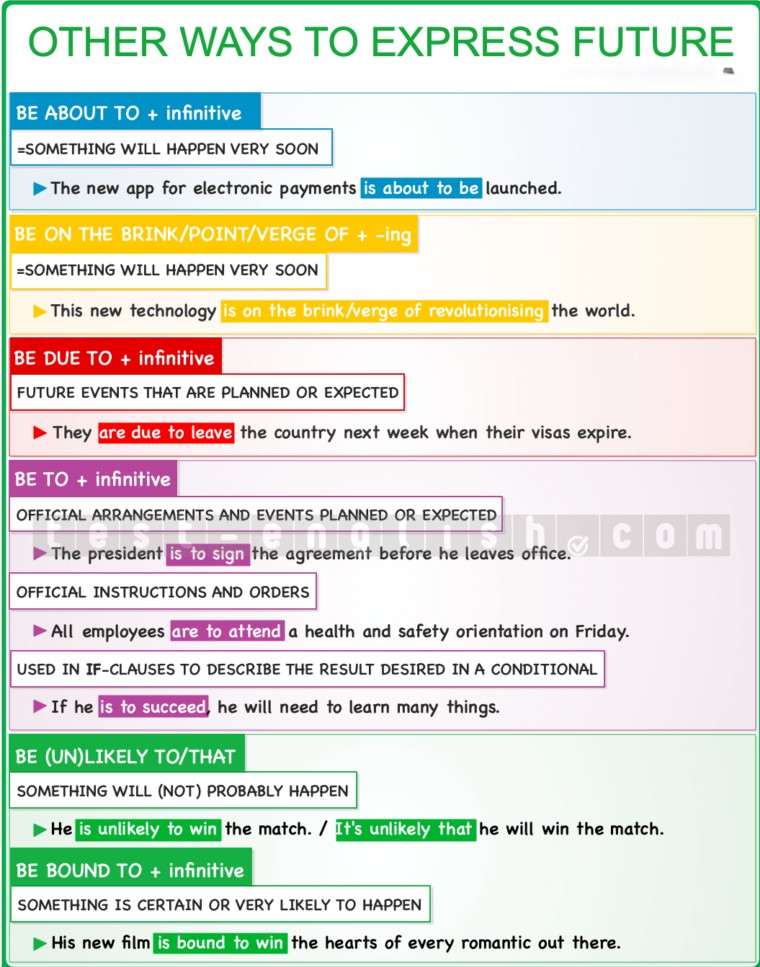
English offers several nuanced ways to talk about the future beyondwill and going to. This guide explains six common structures — including be about to, be due to, be to, and others — with clear examples and usage contexts.
🔵 Be About To / Be on the Brink/Verge/Point of
These expressions describe something that will happen **very soon**.
➤ Be about to + infinitive
- Some apps are about to disappear from the market.
- Scientists say they are about to find a vaccine.
➤ Be on the brink/verge/point of + -ing
- Our country’s economy is on the brink of collapse.
- This historical museum is on the brink of losing half its masterpieces.
- They are on the verge of becoming the team to win the most finals in history.
- The two historical enemies are on the point of reaching an agreement.
🟢 Be Due To + Infinitive
Used for **planned or expected** future events, often in formal or news contexts.
- Greece is due to repay around £6 billion to its creditors next semester.
- The secretary is due to arrive in Montreal tomorrow morning.
🟣 Be To + Infinitive
This formal structure is used in several contexts:
➤ Official arrangements (news style)
- Prince William is to visit Paris for the first time since his mother died.
- Nine care homes for the elderly are to close by the end of March.
➤ Formal instructions or orders
- All employees are to attend a health and safety orientation at the end of the week.
- You are not to leave this room until I say so.
➤ In "if" clauses (conditions for success)
- We need to be open to everybody’s opinion if we are to avoid repeating the mistakes of the past.
- If he is to succeed, he will need to learn to represent the interests of all Americans.
🟡 Be Bound To / Be Likely To (Probability)
➤ Be bound to + infinitive = certain or very likely
- They are bound to like him. He is such a sweet guy.
- His new film is bound to win the hearts of every romantic out there.
➤ Be likely to + infinitive = probable
- The government is likely to pass new regulations very soon.
- It’s likely that the company will have to pay for the damages.
➤ Be unlikely to = probably not
- He is unlikely to win this match.
- It’s unlikely that the weather will change over the next few days.
⚠️ Common Mistakes to Avoid
❌ The meeting is about disappearing.
✅ The meeting is about to be canceled.
❌ She is due arriving tomorrow.
✅ She is due to arrive tomorrow.
❌ They are likely win.
✅ They are likely to win.