Grammar / B2 Grammar lessons and exercises / Wish, rather, if only, it’s time: Unreal uses of past tenses
I Wish / If Only & Related Structures
Expressing wishes, regrets, and desires about unreal situations is essential at B2 level. I wish and If only help us talk about things we want to be different.
🟦 I Wish / If Only
➤ Wish + Past Simple → Present/Future (unreal)
We use this to talk about things we’d like to be different now or in the future (but are unlikely or impossible).
- I wish things were different.
- We wish we had enough money to help you.
- I wish I could be there for you tomorrow.
➤ Wish + Past Perfect → Past Regret
We use this to express regret about something that happened (or didn’t happen) in the past.
- I wish I hadn’t quit my job two years ago.
- I wish we hadn’t wasted all that money.
➤ Wish + Person + Would → Annoyance / Request for Change
Used when we want someone (or something) to change their behavior—often because it bothers us.
- I wish you would stop biting your nails. I hate it when you do it.
- I wish it would stop raining. It’s been three days!
❌ We cannot say: I wish I would... (This structure is only for other people/things, not ourselves.)
🔍 Note on was vs. were
After I wish or If only, we often use were (instead of was) for all subjects in formal English:
If only I were a bit taller! / I wish she were here.
➤ If only = More emphatic "I wish"
- If only you had followed my advice.
- If only you would make a bit of an effort. You are wasting your life!
Download full-size image from Pinterest
🟩 Would Rather / Would Sooner
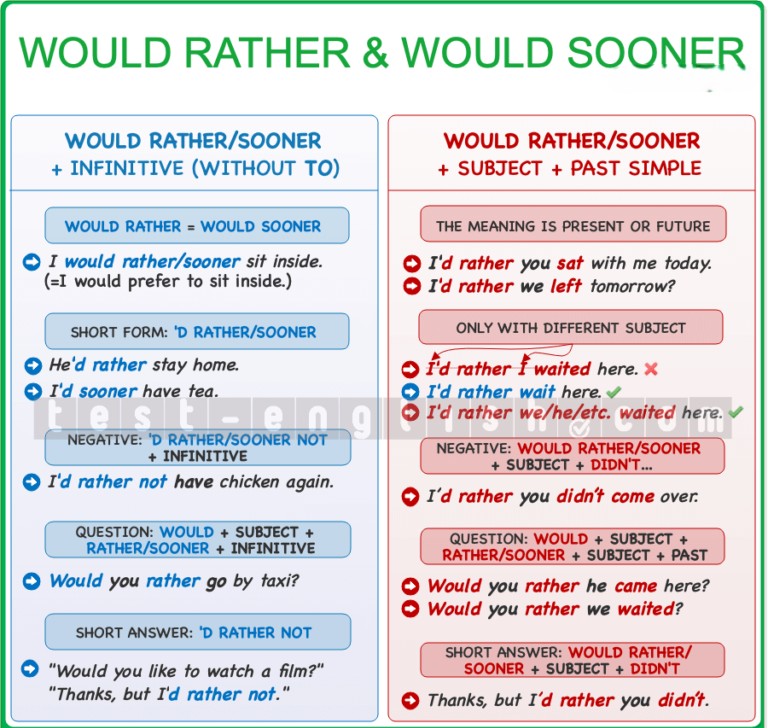
➤ Same Subject: Would rather + bare infinitive
Used to express personal preference.
- I’d rather have tea, please.
- I’d sooner have tea than coffee.
- Would you rather have tea or coffee?
➤ Different Subject: Would rather + subject + past simple (present/future)
- We’d rather she was/were with us now.
- She’d sooner I picked her up after lunch.
- Would you rather we went by bus or by train?
➤ Different Subject: Would rather + subject + past perfect (past)
- I’d rather you hadn’t spoken to her like that.
- I’d sooner you had called me before.
🔍 Again, were is preferred over was in formal contexts:I’d rather he were honest.

🟪 It’s (High) Time...
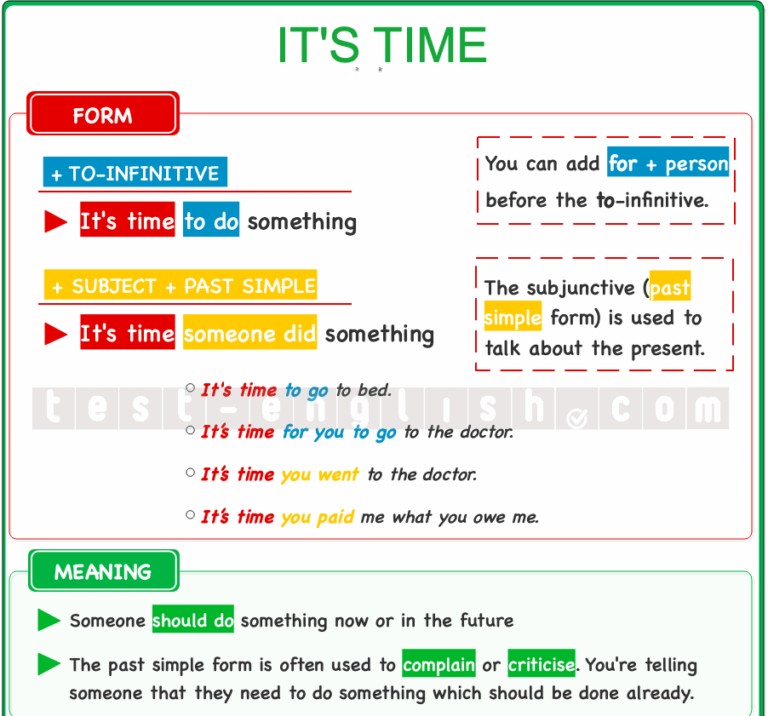
➤ It’s time + subject + past simple
This structure suggests something should happen **now** or **soon** (even though the verb is in the past tense!).
- It’s time you went to the doctor.
- It’s high time you took a decision. We can’t go on like this any longer.
➤ Alternative forms
- It’s time to take a decision.
- It’s time for you to go to the doctor.
🟨 Other Hypothetical Expressions
Words like suppose, supposing, imagine, and what if introduce hypothetical situations—just like if in conditionals.
➤ Real situations (like 1st conditional)
- Imagine you meet him in the street; what are you going to tell him?
- What if she calls? Should I answer?
➤ Unreal present/future (like 2nd conditional)
- What if you found a suitcase full of money? What would you do?
- Supposing he refused, what would we do?
➤ Unreal past (like 3rd conditional)
- Supposing she hadn’t told you anything, you would have acted differently.
- Imagine you had missed the train—how would you get home?