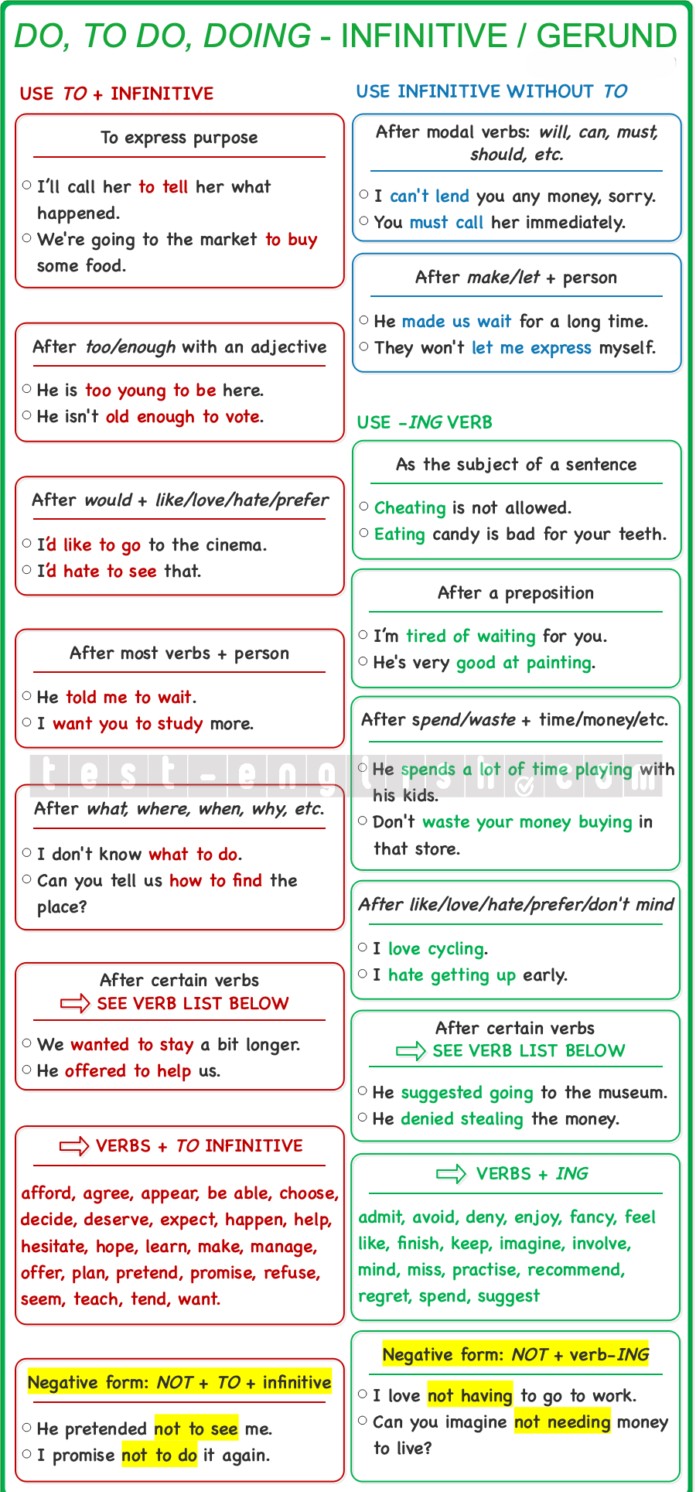
Grammar / B2 Grammar lessons and exercises / Gerunds and infinitives: Complex forms
All Forms of Gerunds and Infinitives: Complex Forms
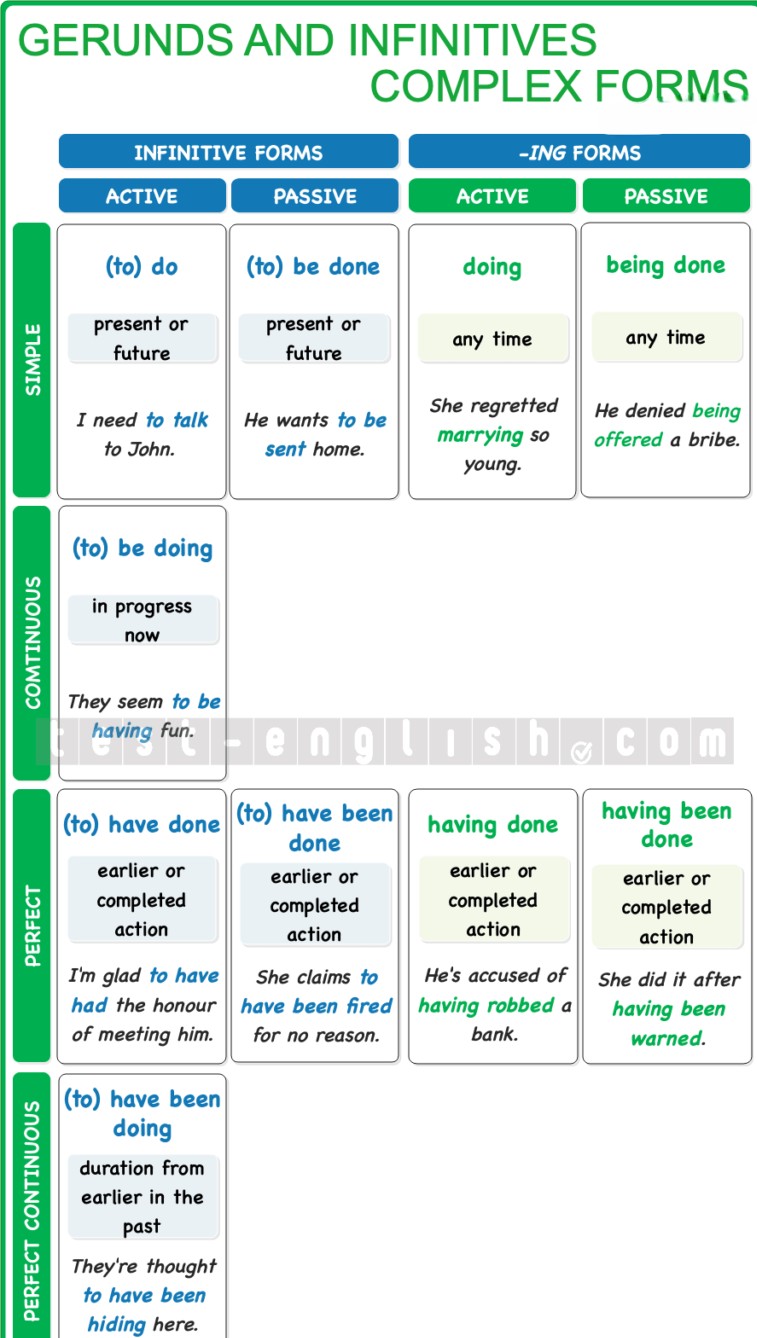
You can see all the gerund and infinitive forms in the table below. Some forms are not included because they don’t exist or are very rarely used. This guide explains how to use simple, continuous, perfect, and passive forms of gerunds and infinitives at B2–C1 level.
Gerunds and infinitives – complex forms
🟦 Simple Gerund vs. Perfect Gerund
There is usually no difference between the simple gerund and the perfect gerund because context makes the timing clear.
- He denied stealing the money.
(= It’s clear the theft happened before the denial) - He denied having stolen the money.
- She regretted marrying too early.
(= She married before she regretted it) - She regretted having married too early.
However, sometimes the meaning changes:
- He denied being married.
(= He denied that he was married at that time) - He denied having been married.
(= He denied ever being married before)
🟩 Simple Infinitive vs. Perfect Infinitive
Sometimes there’s no real difference, but often the perfect infinitive shows the action happened before the main verb.
- It was stupid of me to say anything on Twitter.
- It was stupid of me to have said anything on Twitter.
But usually, the timing matters:
- I’m very glad to work here.
(= I work here now) - I’m very glad to have worked here.
(= I worked here in the past)
🟪 Continuous and Perfect Continuous Infinitive
➤ Continuous Infinitive
Used when the action is in progress around the time of the main verb:
- I’m glad to be spending this weekend with you.
- You shouldn’t be doing this right now, should you?
➤ Perfect Continuous Infinitive
Used to express duration from the past up to the time of the main verb:
- I’m glad to have been sharing my life with you.
- They are thought to have been hiding in the mountains.
🟨 Perfect Infinitive After Passive Reporting Verbs
After passive reporting verbs (e.g., believed, thought, said):
- They are believed to be lovers.
(= now) - They are believed to have been lovers.
(= in the past) - She is thought to be living in Brussels.
(= now) - She is thought to have been living in Brussels.
(= from past until now)
🔵 Perfect Infinitive After would like, would hate, would rather, would prefer
We always use the perfect infinitive to refer to a past event:
- I would like to see you once more.
(= in the future) - I would like to have seen you once more.
(= in the past — but I didn’t) - She would rather be with you.
(= now) - She would rather have been with you.
(= in the past)
⚠️ Passive Infinitives and Gerunds
Use passive forms when the subject receives the action:
- He is too young to be allowed to be here.
- This place needs to be taken care of.
- I don’t mind being told what to do.
- He denied having been offered money to kill the senator.
Gerunds and infinitives – complex forms