Grammar / B2 Grammar lessons and exercises / Generic or common-gender pronouns
Generic or Common-Gender Pronouns
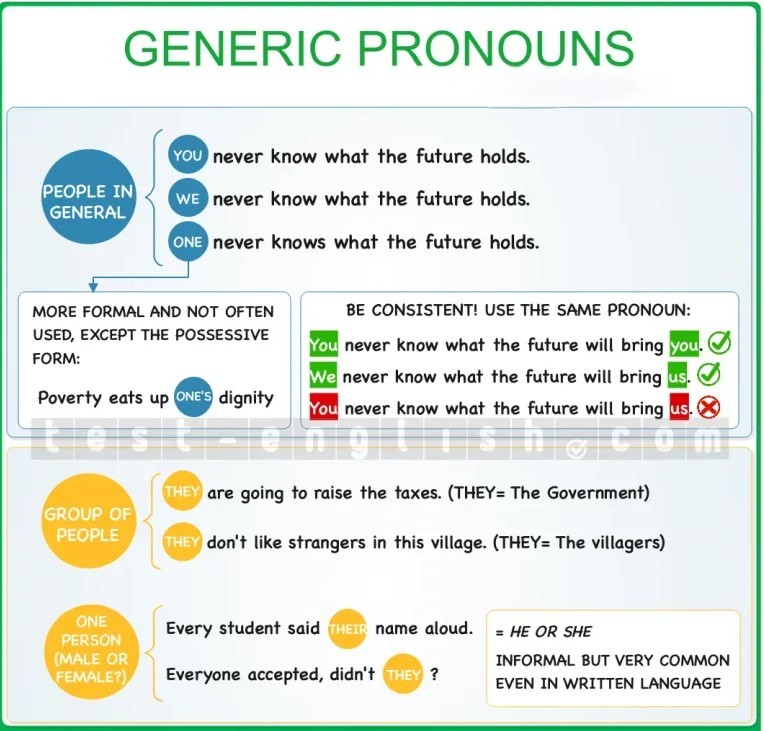
In English, we often refer to people in general—not specific individuals—using generic pronouns. The most common are you, we, one, and they. This guide explains how and when to use them correctly at B2 (upper-intermediate) level.
🟦 One, You, We — Talking About People in General
These pronouns refer to people in general—including the speaker and listener—without naming anyone specific.
➤ Meaning & Examples
- One can never know what to expect from politicians.
- You must always check your work before submitting it.
- We are only human—we all make mistakes.
➤ Register (Formality)
- One is formal and rare in spoken English.
- You and we are neutral and common in both speech and writing.
- The possessive one’s is slightly more common than the subject "one":
Education changes one’s life. → Also: ...your life.
➤ Reflexive Forms
- Helping others helps oneself.
- You should believe in yourself.
- We need to take care of ourselves.
🟩 Consistency Is Key
Once you choose a generic pronoun, stick with it throughout the sentence or paragraph.
✅ You never know what the future will bring you.
✅ We never know what the future will bring us.
❌ You never know what the future will bring us. (Inconsistent!)
🟪 They — Two Main Uses
1. People in General (Often Authorities or a Group)
- They don’t like outsiders in this village.
- They’re going to open a new restaurant downtown.
- They raised taxes again this year.
2. Singular “They” (Gender-Neutral Reference)
Used with indefinite pronouns (someone, everyone, anyone, nobody) to avoid gendered language. This is standard in modern English—even in formal writing.
- Someone left their bag on the bus.
- Every student must bring their ID.
- Nobody wanted to share their password.
- Everyone passed the test, didn’t they?
⚠️ Common Mistakes to Avoid
❌ If someone calls, tell him.
✅ If someone calls, tell them. (Use gender-neutral they/them/their)
❌ One should always be true to yourself.
✅ One should always be true to oneself. (Keep consistent!)
❌ A good doctor always listens to his patients.
✅ A good doctor always listens to their patients. (Singular "they" for gender neutrality)
💡 Tip: In modern English, singular they is widely accepted and preferred over gendered assumptions.
Mastering generic pronouns helps you speak and write more naturally—and inclusively!