Grammar / B2 Grammar lessons and exercises / Narrative tenses, used to, would
Narrative Tenses
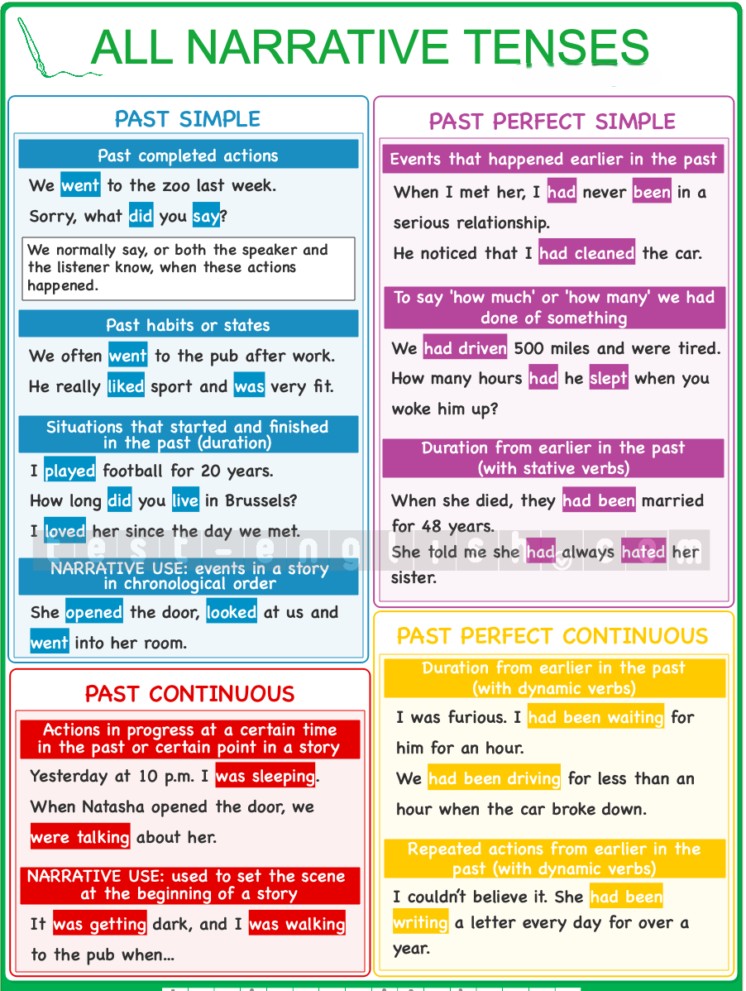
When telling stories or describing past events, English uses a range of narrative tenses to show the order, duration, and nature of actions. Mastering these tenses helps you create clear, vivid, and natural-sounding narratives.
🟦 Past Simple
Used for the main events in a story — actions that happened and finished in the past, often in chronological order.
- When she opened the door, she pretended we weren’t there, and she went to her room.
- He called me and asked me to pick him up, but he wasn’t there when I arrived.
Also used for past habits or states:
- We often went to the bar before dinner.
- He really liked sport and was very fit.
🟩 Past Continuous
Used to set the scene or describe background actions in progress in the past.
- Last night, I was walking home and listening to my iPod when…
- The sun was shining, and tourists were lying on the beach. Suddenly…
Also used for longer actions interrupted by shorter ones (past simple):
- After dinner, I saw she was crying.
- When she opened the door, we were talking about her.
🟪 Past Perfect Simple
Refers to actions or states that happened before the main past events.
➤ Earlier single events
- When she opened the door, he had already left.
- I realised that I had been there before.
- He noticed I had cleaned the car.
➤ Quantity or completion before a past moment
- We had driven 500 miles and needed rest.
- How many hours had he slept when you woke him?
➤ Past states (with stative verbs) — duration up to a past point
- They had been married for 48 years when Anne died.
- I had been in England for four years when I left.
- She told me she had always hated her sister.
🟨 Past Perfect Continuous
Emphasizes the duration or repetition of an action that was ongoing before another past event.
➤ Continuous actions before a past moment (dynamic verbs)
- I had been waiting for him in the cold, and he didn’t call.
- We had been driving for less than an hour when the car broke down.
➤ Repeated actions before a past moment
- She had been writing a letter every day for over a year.
🟦 Used to vs. Would
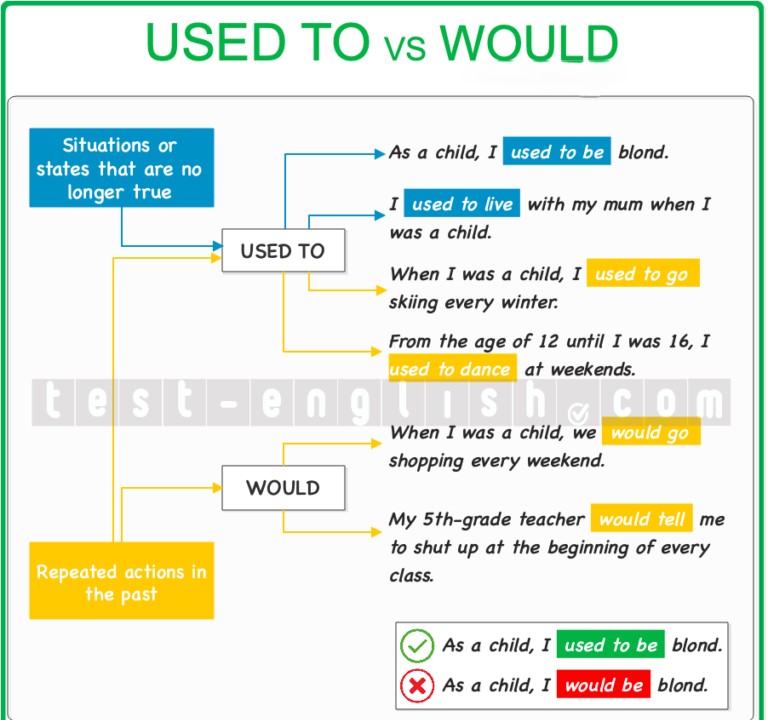
➤ Used to + infinitive
For repeated past actions and past states (no longer true):
- When I was a child, I used to go skiing every winter.
- I used to live with my mum.
- As a child, I used to be blond.
- I didn’t use to smoke before this job.
➤ Would + infinitive
Only for repeated past actions — not for states:
- Every Saturday we would go to the shopping centre.
- My teacher would tell me to shut up every class.
❌ I would be blond as a child.
✅ I used to be blond as a child.
⚠️ Common Mistakes to Avoid
❌ I was having a shower when the phone rang. (if "have" = possession)
✅ I was taking a shower... OR I was having a shower (only if "have" = experience/action)
❌ When I arrived, she had left since two hours.
✅ When I arrived, she had been gone for two hours. OR She had left two hours earlier.
❌ I would live in London as a student.
✅ I used to live in London as a student.
Related tests: