Vocabulary/ B1+ Vocabulary lessons and / Health problems and injuries – B1+ English Vocabulary
Health Problems and Injuries
Learn essential English vocabulary to describe symptoms, injuries, treatments, and medical emergencies.
About This Lesson
In this lesson, you’ll learn vocabulary for common health issues, injuries, medical verbs, and types of medicine. These terms are vital for doctor visits, emergencies, travel, and everyday conversations about well-being.
Health & Injury Vocabulary (B1+ Level)
Infographic showing common symptoms, injuries, and medical scenarios.
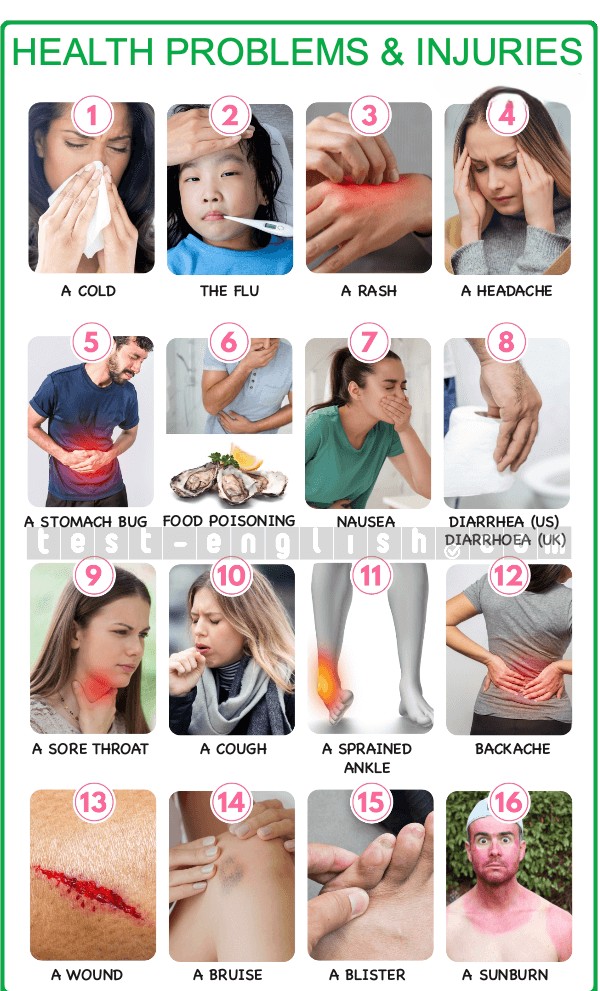
Common Health Problems and Injuries
Essential vocabulary for describing everyday illnesses and physical injuries.
Cold
A common illness passed from person to person. Symptoms include a runny nose, sore throat, coughing, and sneezing.
Sarah caught a cold and has been sneezing all day.
Flu
A contagious virus causing high fever, body aches, headaches, and cold-like symptoms. Often requires bed rest.
Tim had the flu last week and was in bed for days.
Rash
A skin reaction caused by allergies or irritants, often appearing as red, itchy patches.
Emily got a rash after using a new laundry detergent.
Headache
Pain in the head, often due to stress, dehydration, or illness.
John had a headache and couldn’t concentrate on his work.
Stomach bug
A viral infection causing stomach pain, nausea, vomiting, or diarrhea.
Ben caught a stomach bug on vacation and stayed in his hotel room.
Food poisoning
Illness caused by eating contaminated food, leading to nausea, vomiting, or diarrhea.
Lisa got food poisoning from undercooked chicken at a restaurant.
Nausea
A feeling of sickness with an urge to vomit.
The roller coaster ride made Mark feel intense nausea.
Diarrhea
Frequent, loose, or watery bowel movements, often due to infection.
After drinking contaminated water, Jane suffered from severe diarrhea.
Sore throat
Pain or irritation in the throat, often from a cold, flu, or infection.
Kevin woke up with a sore throat and could barely speak.
Cough
A reflex to clear the throat of mucus or irritants; common with colds or flu.
Amanda has had a persistent cough for the past few days.
Sprained ankle
An injury from twisting the ankle, causing pain, swelling, and difficulty walking.
While playing soccer, Mike sprained his ankle and had to be carried off the field.
Backache
Pain in the back, often from poor posture, heavy lifting, or injury.
Sitting for long hours gave Robert a backache.
Wound
A cut, hole, or injury to the skin or flesh, often from a sharp object, causing bleeding.
The knife left a deep wound on his arm, requiring stitches.
Bruise
A discolored area of skin caused by broken blood vessels under the skin after an impact.
Nancy bumped into the coffee table and got a bruise on her leg.
Blisters
Small fluid-filled bubbles on the skin, usually from friction (e.g., new shoes).
Wearing new shoes on a long hike gave Olivia a painful blister.
Sunburn
Skin damage from overexposure to the sun, causing redness, pain, and heat.
Peter forgot sunscreen and ended up with a bad sunburn.
Useful Verb Phrases for Health Situations
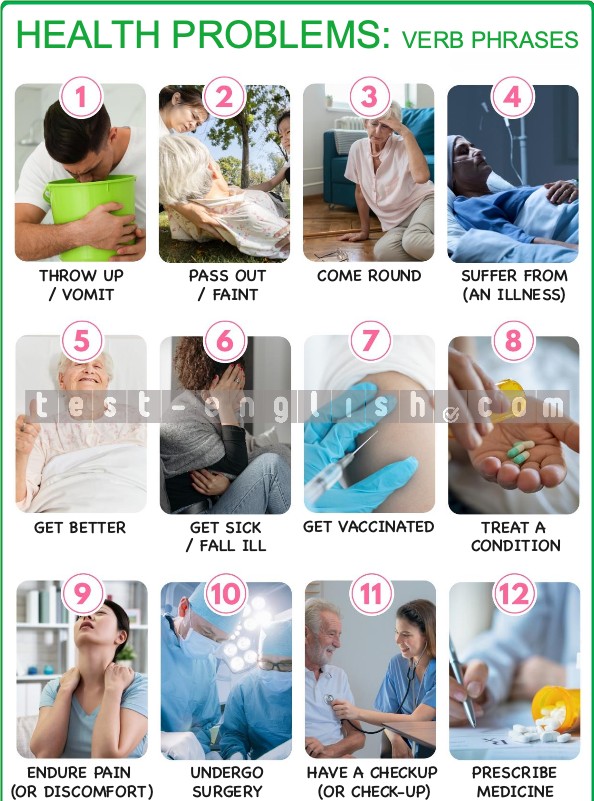
Learn how to talk about getting sick, recovering, and receiving medical care.
Throw up / Be sick (UK)
To vomit—expel stomach contents through the mouth.
John threw up on the carpet.
Pass out / Faint
To lose consciousness temporarily.
Sam passed out on the bus because of the heat.
Come round
To regain consciousness after fainting.
Emily finally came round when they gave her water.
Suffer from
To have a chronic or ongoing illness or condition.
Lucy is suffering from depression.
Get better
To recover from an illness.
Tim was ill last week, but he’s getting better.
Get sick / Fall ill
To become unwell.
He got sick with the flu last week.
Get vaccinated / Have a vaccination
To receive a vaccine to prevent disease.
I get vaccinated against the flu every winter.
Treat a condition
To manage an illness with medicine or therapy.
He is treating his condition with painkillers.
Endure pain or discomfort
To experience ongoing pain or illness.
Poor James is enduring a lot of discomfort with his back injury.
Undergo surgery
To have a medical operation.
Doris underwent surgery to treat her knee injury.
Have a check-up
To visit a doctor for a general health examination.
Luke has a check-up with his doctor every two years.
Get a prescription / Be prescribed medicine
To receive a doctor’s written instruction for medication.
The doctor diagnosed a throat infection and prescribed antibiotics.
Common Medicines
Understand and use vocabulary for everyday medications.
Painkillers
Medicines like aspirin, ibuprofen, or paracetamol used to relieve pain.
Daniel took painkillers to ease his headache.
Antibiotics
Medicines that treat bacterial infections.
The doctor prescribed me antibiotics for my throat infection.
Cough syrup
Liquid medicine to soothe coughs and sore throats.
Take this cough syrup twice a day and your cough will soon go away.
Laxatives
Medicines that relieve constipation.
Tom took a laxative to help his constipation.
Antidepressants
Medicines used to treat depression and anxiety.
Ruth takes antidepressants to ease her anxiety.
Sleeping pills
Medicines used to treat insomnia or sleep disorders.
After a week without sleep, I decided to take sleeping pills.