Vocabulary/ B2 Vocabulary lessons and / Pollution and the environment – B2 English Vocabulary
Pollution and the Environment
Learn essential English vocabulary related to environmental challenges and sustainable solutions.
About This Lesson
In this B2 Pre-advanced Vocabulary Lesson about Pollution and the Environment, you will learn crucial terms related to environmental protection and sustainability. From the damaging effects of a growing carbon footprint to the protective actions of reforestation and sustainable practices, this lesson will equip you with the language needed to talk about environmental challenges and solutions.
Threats to the Environment

Threats to the Environment
Key terms describing environmental problems and their causes.
Carbon footprint
The total amount of greenhouse gases released by a person, group, or activity.
Greenhouse gases
Gases like carbon dioxide that trap heat in the Earth’s atmosphere and contribute to global warming.
Fossil fuels
Natural fuels such as oil, coal, and natural gas that are used for energy.
Greenhouse effect
A process that occurs when certain gases in the Earth’s atmosphere trap the sun’s heat and warm the planet.
Global warming
Gradual increase in the average temperature of the Earth’s atmosphere due to the greenhouse effect.
Climate change
Changes in global or regional climate patterns, largely due to the increase of the Earth’s temperature.
Rising sea levels
Increasing height of the ocean’s surface, mainly due to the melting of ice caps and glaciers and the expansion of seawater as it warms.
Desertification
The process by which fertile land becomes desert, often because of drought and deforestation.
Deforestation
The clearing or thinning of forests by humans that cut down trees often to make way for agriculture or development.
Ecological footprint
A measure of how much an individual or group consumes resources and generates waste, compared to the Earth’s ability to regenerate those resources and absorb the waste.
Plastic waste
Used plastic items that are discarded and can harm the environment because they take a long time to break down.
Shrinking habitats
The reduction in the size of the natural environments where plants and animals live, often due to human activities like urbanization or pollution.
Helping the Environment
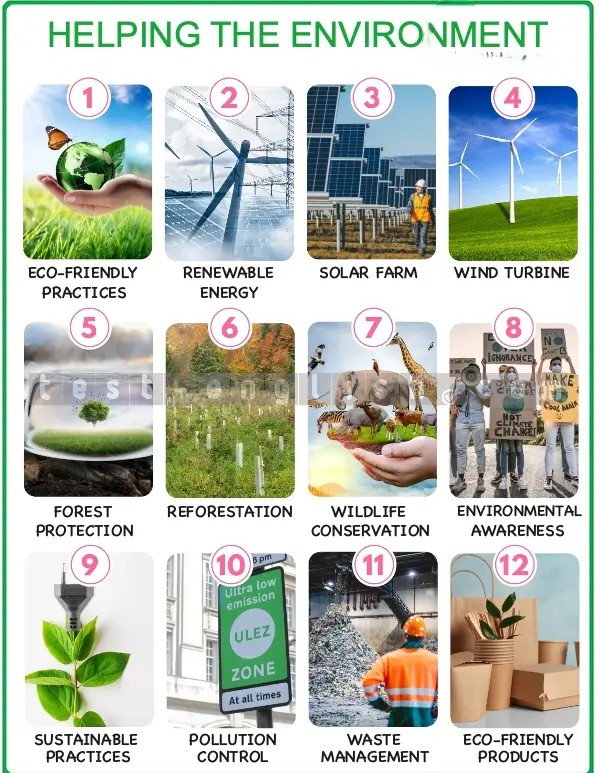
Helping the Environment
Essential vocabulary for environmental protection and sustainability.
Eco-friendly practices
Actions that help protect the environment by reducing waste and conserving natural resources.
Renewable energy
Energy made from natural sources that never run out, like the sun and wind.
Solar farms
Large-scale setups of solar panels that capture sunlight and convert it into electrical energy.
Wind turbines
Tall structures with blades that spin with the wind to generate electricity.
Forest protection
Efforts to preserve forests from deforestation and promote biodiversity.
Reforestation
The act of planting trees in deforested areas to rebuild forest ecosystems.
Wildlife conservation
The practice of protecting wild species and their habitats to prevent extinction.
Environmental awareness
Understanding the importance of protecting the environment and promoting healthy ecosystems.
Sustainable practices
Methods of using resources that ensure they are not depleted or permanently damaged.
Pollution control
Strategies and technologies used to reduce the release of harmful substances into the environment.
Waste management
The process of treating and disposing of trash in ways that are safe and do not hurt the environment, like recycling.
Eco-friendly products
Items made using recycled materials or natural materials that are not harmful to the environment.
Verb Phrases and Phrasal Verbs
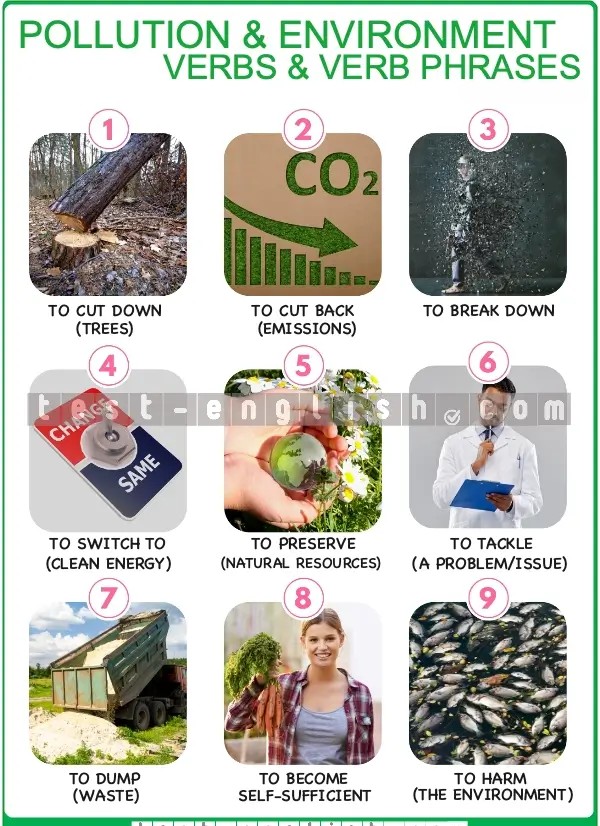
Verb Phrases and Phrasal Verbs
Common verb phrases used when discussing environmental action.
Cut down (a tree)
To fell a tree by cutting its trunk.
The company was fined for illegally cutting down trees in the protected forest area.
Cut back (on)
To reduce something, such as emissions or consumption.
The new regulations require factories to cut back on their emissions by 30%.
Break down
To decompose or decay into smaller parts.
The plastic in coffee pods takes more than 500 years to break down.
Switch to
To start using a new practice or material instead of an old one.
Our city plans to switch to clean energy by installing solar panels on all public buildings.
Preserve
To protect natural resources or species from damage or extinction.
The new wildlife reserve was established to preserve natural resources and protect endangered species.
Tackle
To take action to deal with a problem.
The government announced a new initiative to tackle environmental issues like air pollution and deforestation.
Dump
To dispose of waste improperly or carelessly.
Illegal dumping of waste in the river has led to severe water pollution.
Become self-sufficient
To provide for your own needs without external help (e.g., energy, food).
They installed solar panels and a vegetable garden to become self-sufficient in energy and food production.
Harm the environment
To cause damage to ecosystems through pollution or destructive actions.
Excessive use of pesticides in farming can harm the environment, affecting both soil and water quality.