Grammar / B1+ Grammar lessons and exercises / Review of all upper-intermediate verb tenses (CEFR B2.1)
Review of All Upper-Intermediate Verb Tenses (CEFR B2.1)
In this grammar lesson, you will review key upper-intermediate verb tenses, including present simple and continuous, past simple and continuous, present perfect simple and continuous, past perfect simple and continuous, future simple and continuous, and future perfect simple and continuous. Each tense is explained with clear usage rules and examples to help you understand when and how to use them correctly.
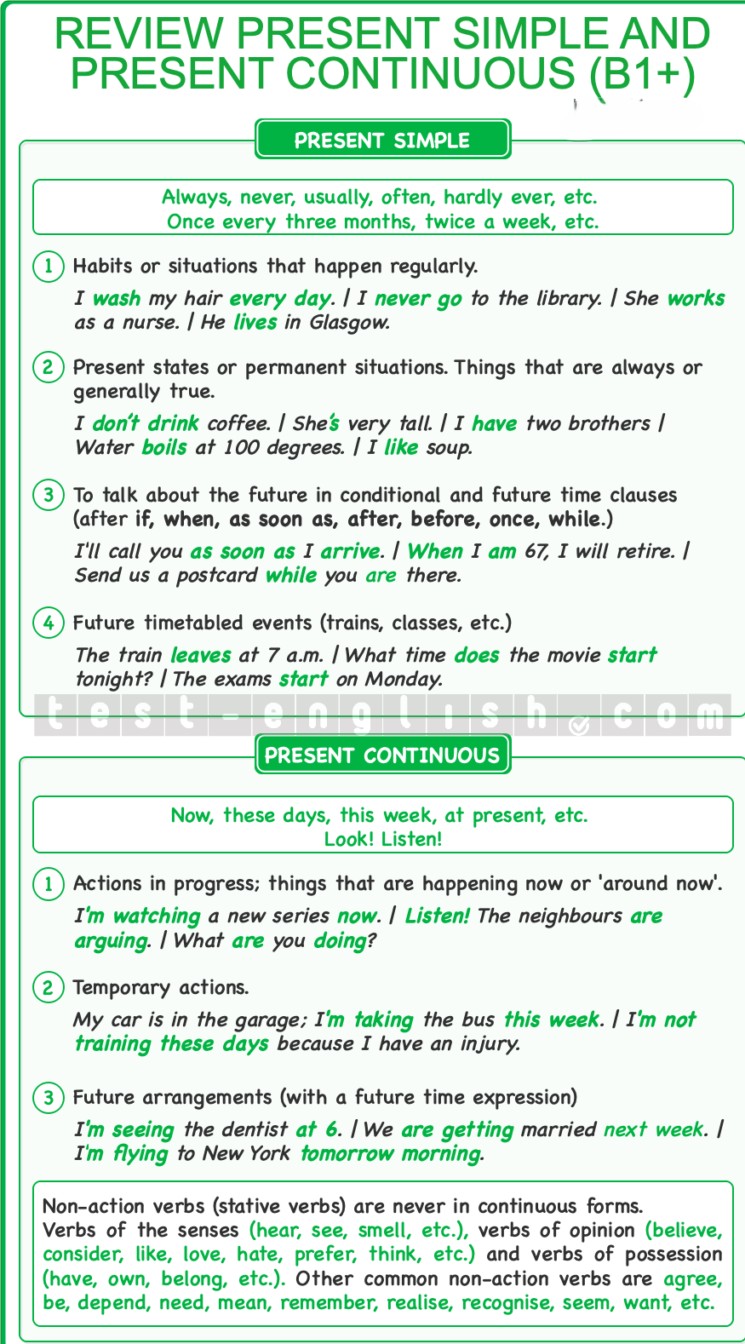
1️⃣Present Simple & Present Continuous
Present Simple: habits, permanent states, timetabled future events, conditionals. Indicators: always, never, usually, every day.
Present Continuous: actions happening now, temporary situations, future arrangements. Indicators: now, at the moment, these days, this week. ❗ Stative verbs (e.g., know, like, believe) are **not** used in continuous forms.
- • She works in London. (permanent job)
- • I ’m meeting Sarah tomorrow. (future arrangement)
- • He doesn’t understand the question. (stative → no continuous)
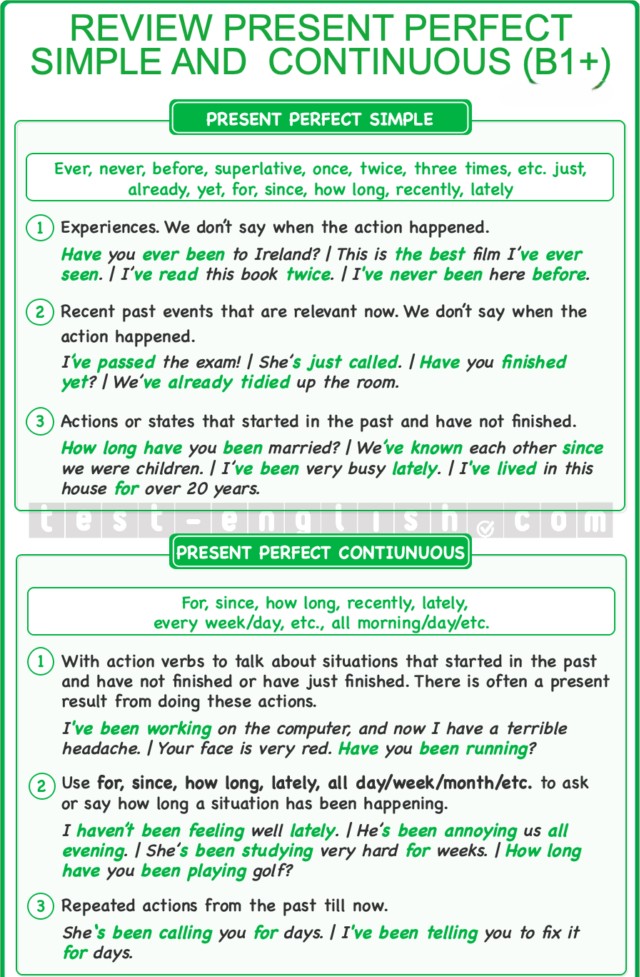
2️⃣Present Perfect Simple & Continuous
Both can describe situations that started in the past and continue now. → Use simple with stative verbs; continuous with dynamic verbs to emphasize duration.
✅ We ’ve had this car for years. (stative → simple) ✅ I ’ve been waiting for hours! (dynamic + emphasis on duration)
✅ Who has eaten my cookies? (finished — none left) ✅ Who has been eating my cookies? (unfinished — some left)
✅ Look! I ’ve washed the car. (result: clean) ✅ I’m sweaty — I ’ve been washing the car. (process: still dirty/hot)
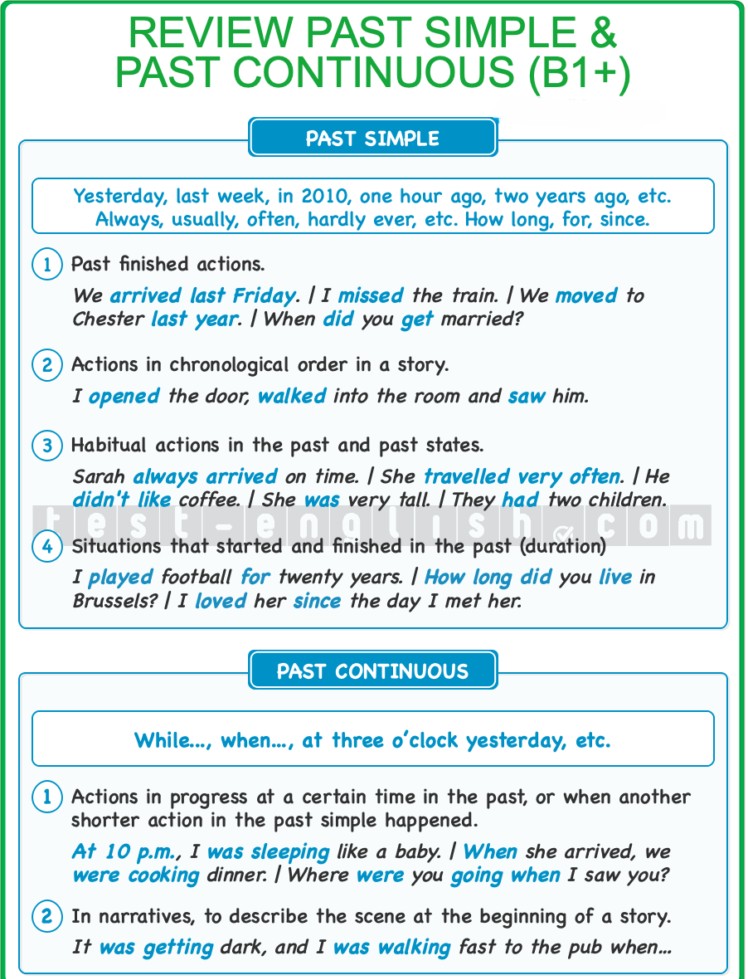
3️⃣Past Simple & Past Continuous
Past Simple: completed actions, sequences, past habits. Indicators: yesterday, last week, in 2010.
Past Continuous: actions in progress at a specific past time, or interrupted actions. Often used with when, while, at 8 p.m. yesterday.
- • I walked to school and met Tom. (sequence)
- • While I was cooking, the phone rang. (interrupted action)
- • At 9 p.m., they were watching a movie. (in progress)
4️⃣Past Perfect Simple & Continuous
Past Perfect Simple: an action completed before another past action. Indicators: already, by the time, never before.
Past Perfect Continuous: emphasizes duration of a past action before another past moment (with dynamic verbs). Indicators: for, since, how long.
- • She had left when I arrived. (completed before arrival)
- • They had been arguing for hours before the police came. (duration)
- • I had never seen such a beautiful sunset. (experience before past moment)

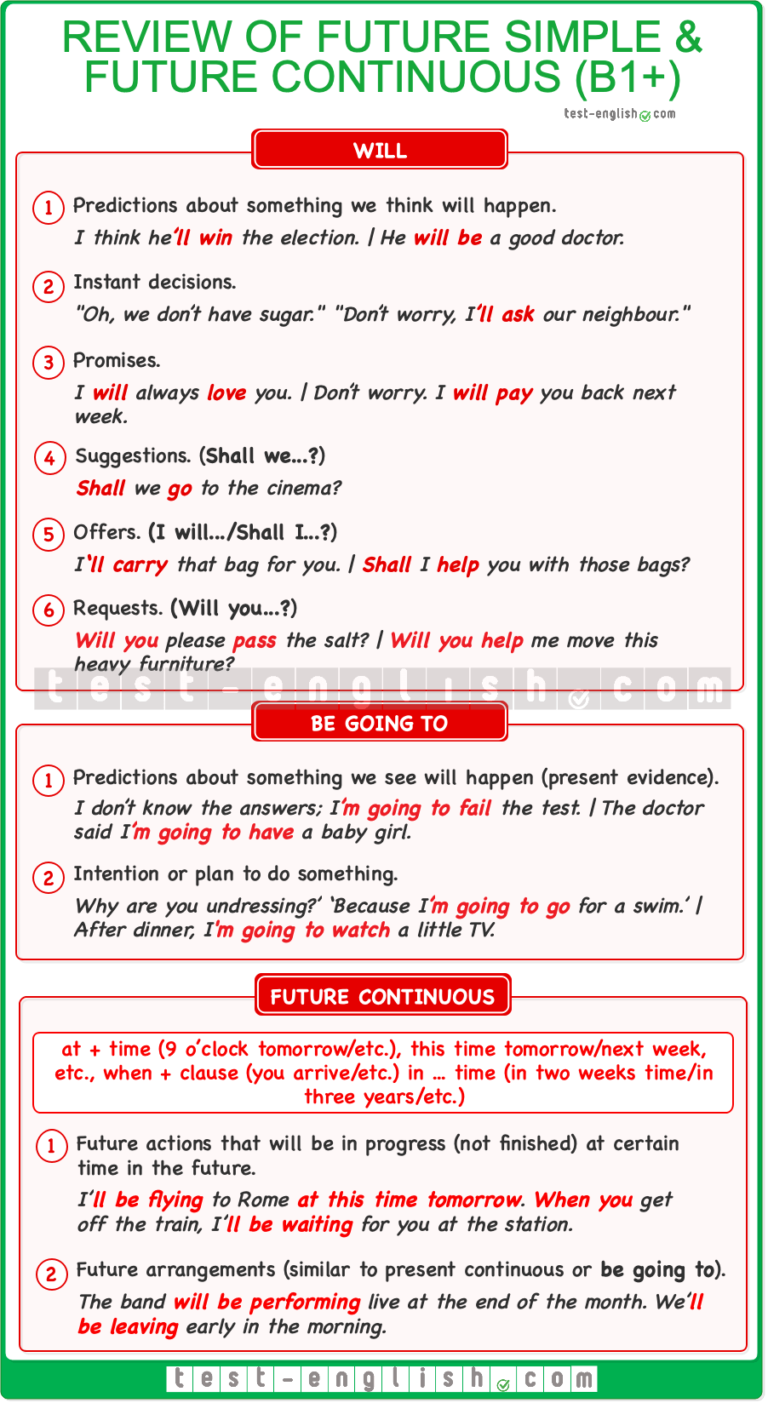
5️⃣Future Simple & Future Continuous
Future Simple (will): predictions, promises, instant decisions, offers.Be going to: plans or predictions with present evidence.
Future Continuous: actions in progress at a specific future time or fixed arrangements.
- • I ’ll help you! (instant offer)
- • Look at those clouds — it ’s going to rain. (evidence)
- • This time tomorrow, I ’ll be flying to Rome. (in progress)
- • Don’t call at 8 — we ’ll be having dinner. (future arrangement)

6️⃣Future Perfect Simple & Continuous
Future Perfect Simple: actions completed before a specific future time. Indicators: by tomorrow, by 2030, by the time.
Future Perfect Continuous: emphasizes how long an action will have been ongoing up to a future point.
- • By next year, I will have graduated.
- • By 2050, scientists will have found a cure.
- • In July, we will have been living here for ten years. (duration)
- • By the end of the day, she will have been working for 12 hours straight.
📌 Key Takeaways:
🔁 Use statement word order in all perfect and continuous forms.
⏳ Continuous = ongoing action; Simple = completed or general fact.
🧠 Stative verbs (like, know, belong) → avoid continuous tenses.
🕒 Time markers (e.g., for, since, by, when) help identify the correct tense.