Grammar / B1+ Grammar lessons and exercises / Narrative tenses: All past tenses
Narrative Tenses: All Past Tenses
Narrative Tenses – Overview
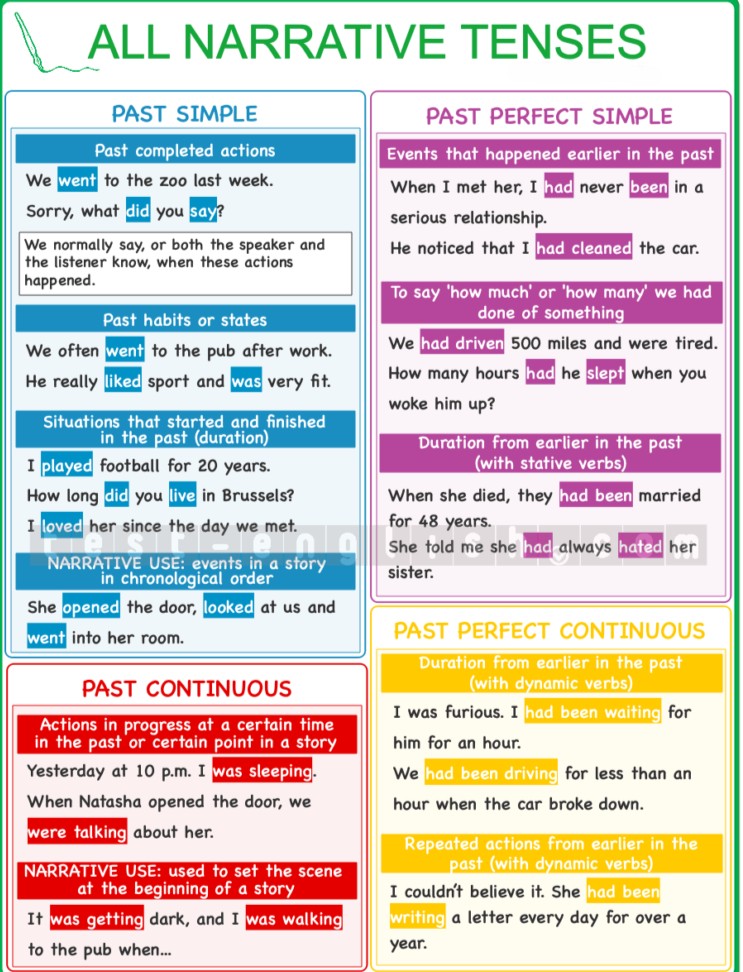
Past Simple
We use the past simple to talk about past events in chronological order — the main events of a story.
When she opened the door, she pretended we weren’t there and went to her room.
He called me and told me to go, but he wasn’t there when I arrived.
We also use the past simple to talk about past habits or past states.
We often went to the bar for a drink before dinner.
He really liked sport and was very fit.
Past Continuous
We use the past continuous to set the scene in a story — to describe background actions or atmosphere.
Last night, I was walking home listening to my iPod when…
The sun was shining, and lots of tourists were lying on the beach. Suddenly…
We also use the past continuous for actions in progress in the past, especially when they are interrupted by shorter actions (usually in the past simple).
After dinner, I went into the living room and saw that she was crying.
When she opened the door, we were talking about her.
Past Perfect Simple
We use the past perfect simple to talk about an earlier past — events that happened before the main past event in the story.
Earlier single events
Used for completed actions or experiences that occurred before another past moment.
When she opened the door, he had already left.
I realised that I had been there before.
When I met her, I had never been in a serious relationship.
He noticed I had cleaned the car. It was smooth and shiny.
How much / how many (earlier in the past)
We use the past perfect simple (not continuous) to say how much or how many of something had been done before a past moment.
We had driven 500 miles, and we needed some rest.
How many hours had he slept when you woke him up?
Duration from earlier in the past (stative verbs)
With stative verbs (e.g., be, know, have, hate), we use the past perfect simple to describe states that began earlier and continued up to a point in the past. Common time expressions: how long, for, since, always.
The day Anne died, they had been married for 48 years.
The day I left, I had been in England for exactly four years.
She told me she had always hated her sister.
Past Perfect Continuous
Duration from earlier in the past (dynamic verbs)
We use the past perfect continuous with dynamic verbs to describe longer actions that started earlier in the past and continued up to (or just before) the main past event.
I was furious. I had been waiting for him in the cold, and he didn’t call to say he’d be late.
We had been driving for less than an hour when the car broke down.
Repeated actions from earlier in the past
Used for repeated or habitual actions that occurred over a period leading up to a past moment.
I couldn’t believe it. She had been writing a letter every day for over a year.