Grammar / B1+ Grammar lessons and exercises / Indirect questions
Indirect Questions in English
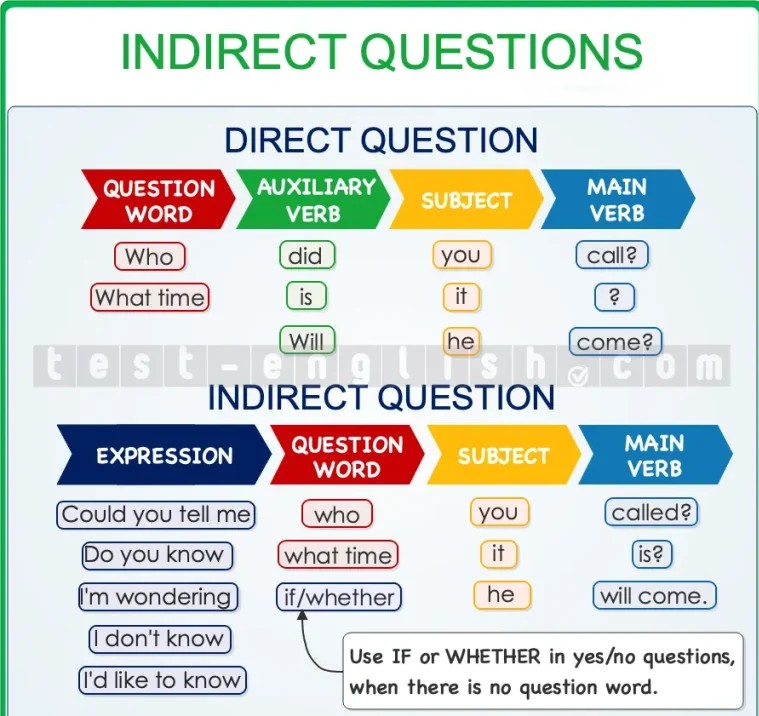
📥 Download full-size image from Pinterest
🟨What Are Indirect Questions?
We normally use indirect questions when we want to be more polite or sound less direct.
They begin with phrases like:
- • Can you tell me…?
- • Could you tell me…?
- • Do you know…?
- • Would you mind telling me…?
- • I wonder…
- • I’d like to know…
- • I’m not sure…
🟦Word Order in Indirect Questions
In indirect questions, use statement word order: subject + verb — not question order.
✅ What time is it? → Direct
✅ Could you tell me what time it is? → Indirect
❌ Do you know where can I find a bank?
✅ Do you know where I can find a bank?
❌ Can you tell me what time do the shops close?
✅ Can you tell me what time the shops close.
🟩More Examples
- • I don’t know what he is doing here.
- • I wonder when he will find the truth.
- • I’m not sure when I can come.
- • I’d like to know where you left the documents.
🟪Yes/No Indirect Questions
For yes/no questions (no question word), use if or whether.
✅ Do you know if he’ll be here soon?
✅ Do you know whether he’ll be here soon?
📌 Key Rules:
🗣️ Indirect questions = polite and use statement word order (subject + verb).
🔁 Never use question order inside the indirect part: ❌ "where can I" → ✅ "where I can".
❓ For yes/no questions, use if or whether.
💬 Common starters: Do you know…?, Could you tell me…?, I wonder…