Grammar / A2 Grammar lessons and exercises / Present continuous for future arrangements
Present Continuous for Future Arrangements
📌 Future Arrangements
We often use the present continuous to talk about the future — especially when we have already made arrangements with other people, and often include a time or place.
- I’m meeting Sally at 7. → I’ve talked to her, and we arranged it.
- I’m flying to New York tomorrow morning. → I have the ticket.
- We’re getting married next July. → We’ve decided and probably booked venues.
💡 Common with travel & social verbs:
- I’m leaving very early tomorrow. I’m taking the 7.30 train.
- I’m playing golf with Jack next Saturday. Would you like to come?
- I’m seeing the dentist after class.
📌 Present Continuous vs Be Going To
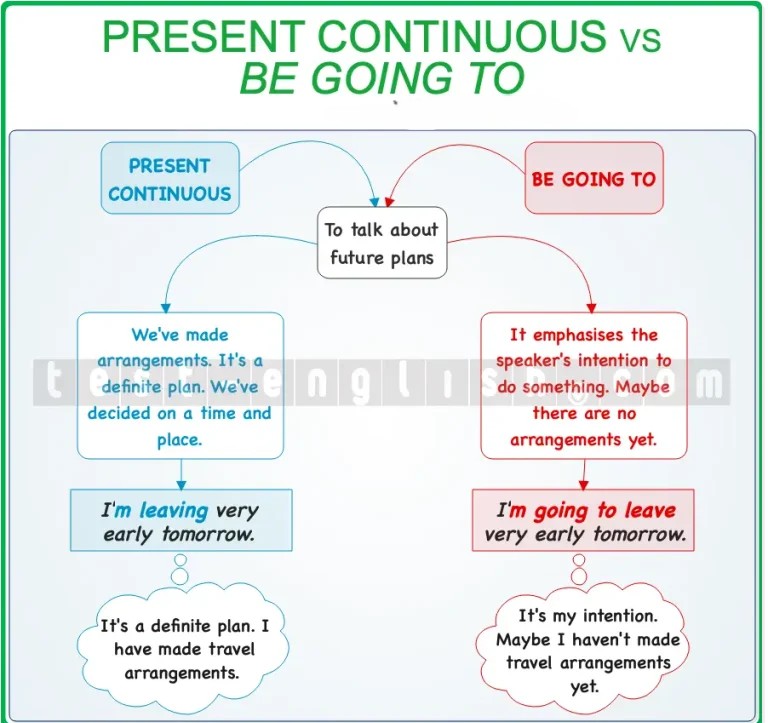
You can often use either present continuous or be going to for future plans — but there’s a subtle difference:
✅ Present Continuous
→ For arrangements (you’ve fixed time/place with others).
“I’m leaving at 8 tomorrow.”
→ It’s scheduled. Tickets booked, people informed.
✅ Be Going To
→ For intentions or personal plans (not necessarily arranged).
“I’m going to study for the exams tomorrow.”
→ It’s my plan, but no fixed time/place yet.
🔁 Compare:
“Your car is dirty.”
“I’m going to wash it tomorrow.”
→ Intention — not arranged yet.
“I’m washing the car at 10 tomorrow — the car wash is booked.”
→ Arrangement — time/place fixed.
📌 Will for Instant Decisions
Use will for decisions made at the moment of speaking — especially offers, promises, or reactions.
- “Oh, we don’t have sugar.” → “Don’t worry, I’ll buy some.”
- “The phone’s ringing!” → “I’ll get it!”
📌 Predictions: Use Will or Be Going To
⚠️ Do NOT use present continuous for general predictions. Use will or be going to instead.
- I think he’ll win the election. → Prediction (no arrangement)
- The doctor said I’m going to have a girl. → Prediction based on evidence