Grammar / A2 Grammar lessons and exercises/ Might, might not: Possibility
Might / Might Not: Form and Use
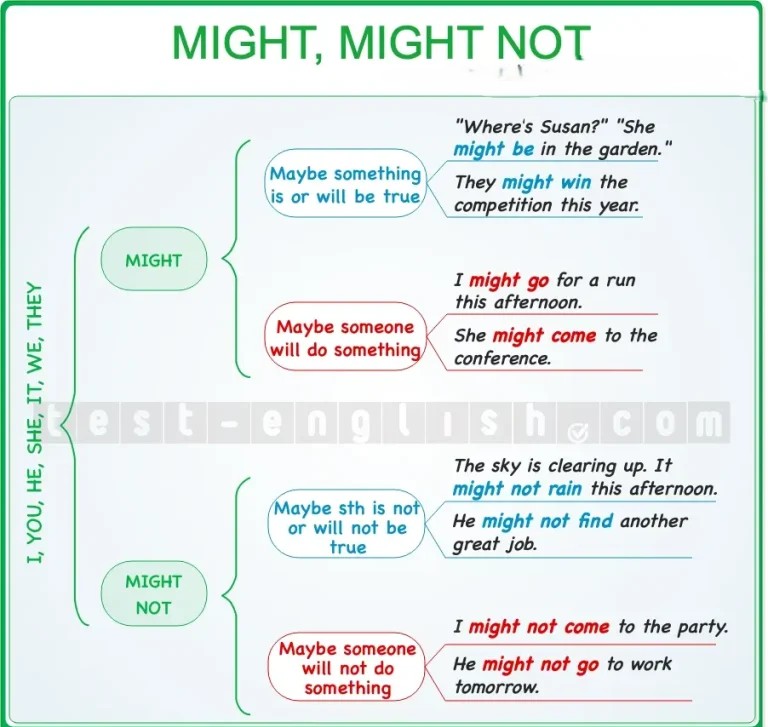
🟦 Might (not) = Maybe it is (not) true
We use might and might not when we think something is (not) true or will (not) happen, but we’re not sure.
✅ “Suzan isn’t answering the phone.” → “She might be in the garden.”
✅ The sky is clearing up. It might not rain this afternoon.
✅ They might win the competition.
🟩 I might (not) = It is possible that I will (not)
We say someone might do something to mean “it is possible they will do it.”
✅ I might go for a run this afternoon. (= It’s possible I will go.)
✅ She might come to the conference.
🔹 For negatives: might not = it’s possible they won’t
✅ I might not come to the party. (= It’s possible I won’t come.)
✅ He might not go to work tomorrow.
🟪 May / May Not = Might / Might Not
You can use may and may not instead of might and might not. They mean the same thing.
✅ She may be late for class this morning.
✅ They may not like your decision.
💡 Note: “May” is slightly more formal than “might,” but both are correct.
🟧 May I…? (Asking for Permission)
We don’t often use might or may in questions — except for “May I…?” to ask permission.
✅ May I sit here? (= Can I sit here?)
✅ May I come in?
❗ Don’t say: “Might I sit here?” — sounds unnatural or overly formal.
📌 Remember: Might + base verb (no 'to') | Same for all subjects | Use for possibility/uncertainty | Negative: might not | Questions: Only common with “May I…?” for permission