Grammar / A2 Grammar lessons and exercises/ May and might: What’s the difference?
May and Might: What’s the Difference?
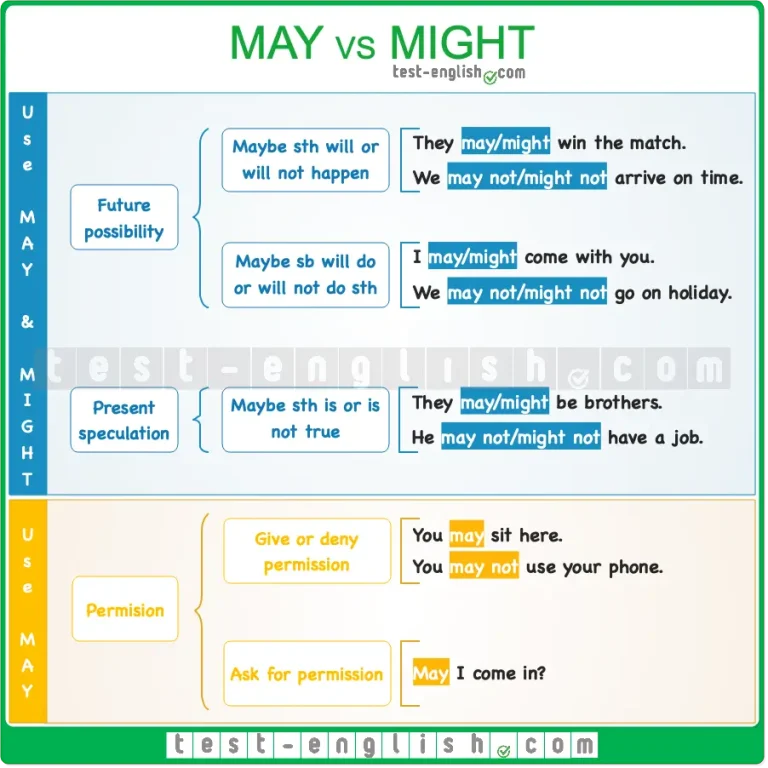
May and might are similar modal verbs that can often be used interchangeably — although with subtle differences in meaning. However, in some contexts, only one of them is correct. In this lesson, we’ll help you understand their differences so you can use them confidently.
🔄 We can use both may and might
✅ For future possibility
Use may or might + base verb to say something could happen in the future.
- It may rain later.
- It might rain later.
✅ For negative future possibility
Use may not or might not + base verb.
- I may not go to the party.
- I might not go to the party.
✅ To speculate about the present
Use may or might + base verb to guess what is true now.
- She may be at home.
- She might be at home.
✅ For negative present speculation
- He may not know the answer.
- He might not know the answer.
💡 Note: In everyday speech, people often use them interchangeably. But may suggests slightly higher probability than might.
✅ We use may (NOT might)
For giving or denying permission
- You may leave early today. ✅
- You might leave early today. ❌ (Unnatural)
- You may not eat in class. ✅
- You might not eat in class. ❌ (Wrong — sounds like uncertainty, not a rule)
To ask for permission (formal/polite)
- May I borrow your pen? ✅
- Might I borrow your pen? ❌ (Grammatically possible but outdated/overly formal)
⚠️ Common Mistake to Avoid
❌ We may/might to visit you next summer.
✅ We may/might visit you next summer.
❌ She may/might not to arrive in time.
✅ She may/might not arrive in time.
💡 Remember: After may or might, always use the base form of the verb (infinitive without “to”).