Present simple vs present continuous
Grammar / A2 Grammar lessons and exercises / Present simple vs present continuous
Present Simple vs Present Continuous
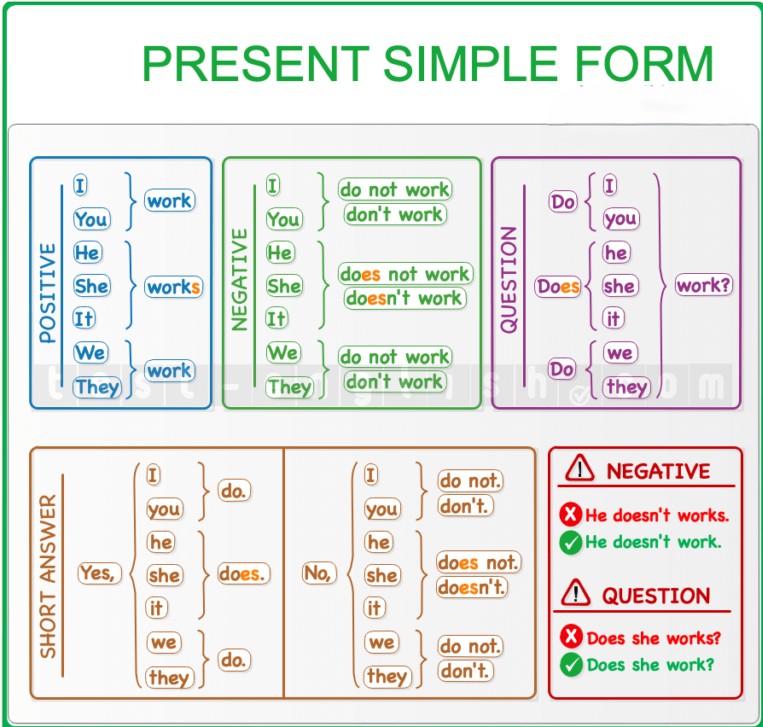
📝 Present Simple: Form
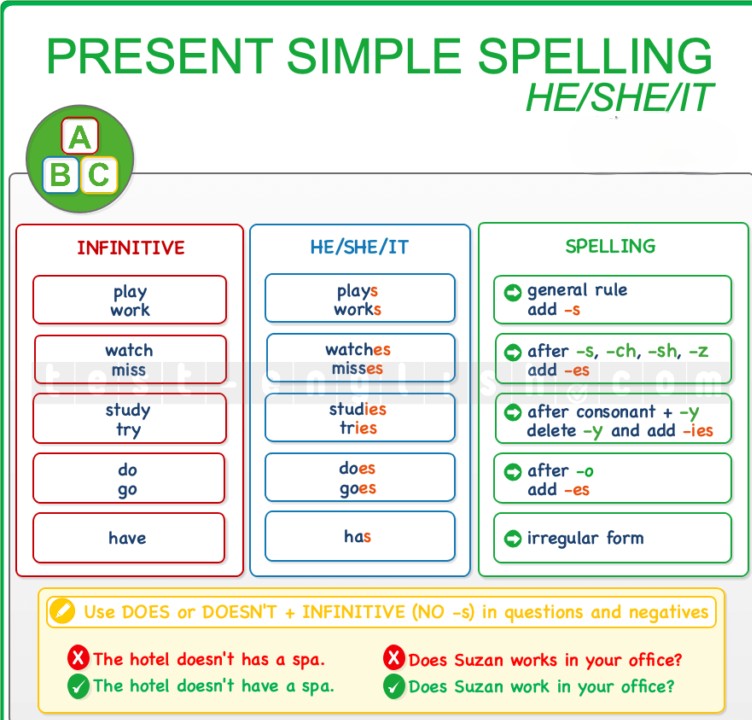
The spelling of he/she/it
The spelling changes for third-person singular (he/she/it). Add -s or -es to the base verb.
- He works in an office.
- She goes to school.
- It catches the ball.
🔄 Present Simple: Use
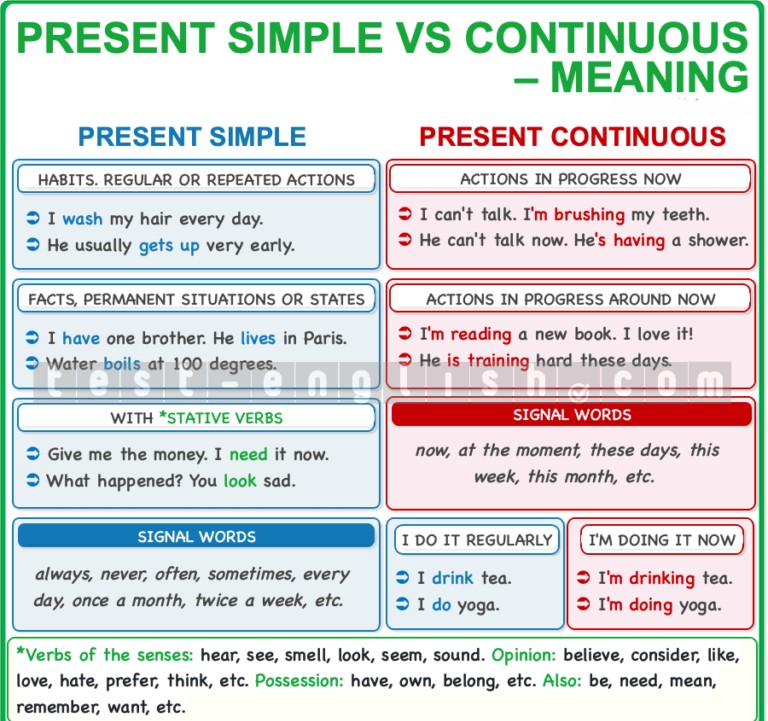
- Habits or regular actions:
I wash my hair every day.
I never go to the library. - Permanent situations or general truths:
She’s very tall.
Water boils at 100 degrees.
I like soup. - Adverbs of frequency (always, sometimes, never, etc.):
→ Go before the main verb or after “be”:
He usually gets up early.
I am never late. - Expressions of frequency (twice a week, every month, etc.):
→ Go at the end of the sentence:
We go to the cinema once a month.
📝 Present Continuous: Form
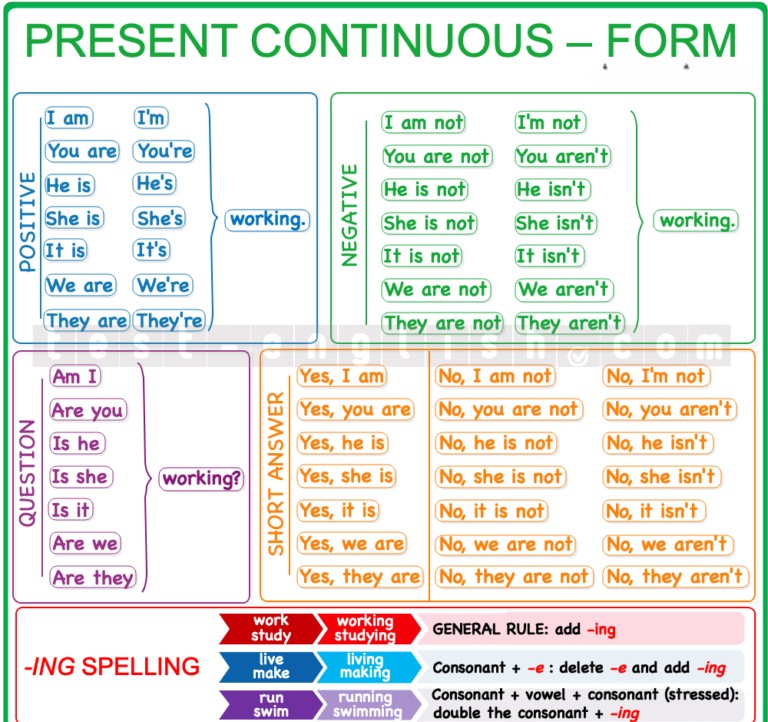
Form: am/is/are + verb-ing
- I am working.
- She is studying.
- They are not playing.
- Are you listening?
🔄 Present Continuous: Use
- Actions happening now or “around now”:
I can’t talk now. I’m brushing my teeth.
I’m reading a new book these days. - Temporary situations:
I’m going to work by bus this week.
I’m living with my cousins. - Used with time expressions: now, at the moment, this week, these days
He’s studying a lot this week.
I’m not feeling well these days. - ⚠️ Stative verbs (non-action verbs) → NOT used in continuous:
believe, like, love, hate, need, want, see, hear, be, etc.
✅ I need help. ❌ I am needing help.
✅ She seems sad. ❌ She is seeming sad.
🆚 Present Simple vs Present Continuous