Grammar / B1 Grammar lessons and exercises \ Present perfect simple and present perfect continuous
Present Perfect Simple & Continuous: Form and Use
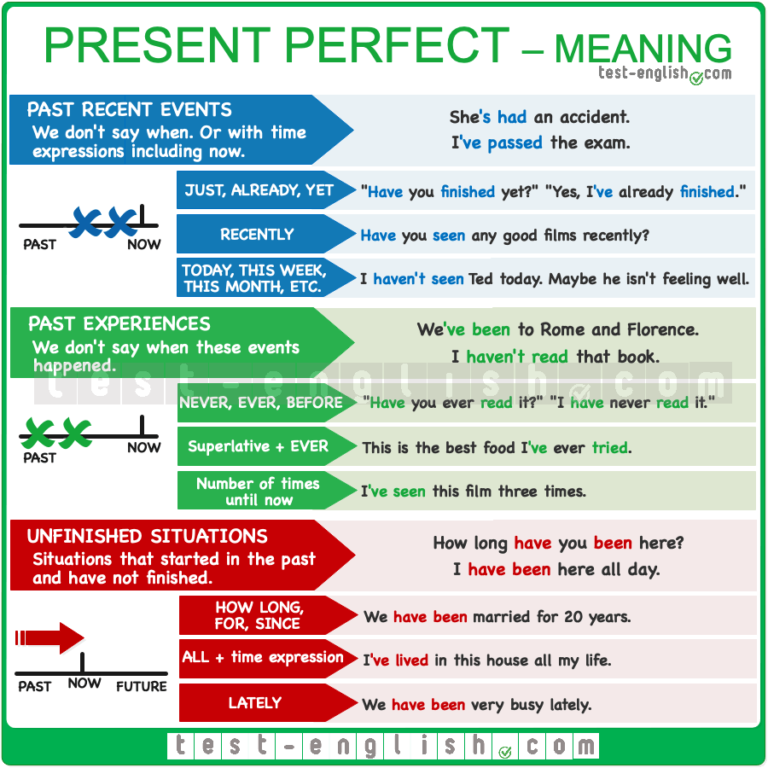
🟦Present Perfect Simple: Use
Use the present perfect simple for:
- ✅ Past actions with no specific time mentioned:
I’ve visited Paris. (We don’t say when.) - ✅ Experiences in your life (ever/never):
Have you ever eaten sushi? - ✅ Situations that started in the past and continue now (with stative verbs):
We’ve known each other since 2010. - ✅ Recent actions with present results:
She’s broken her phone. (It’s not working now.)
🟩Present Perfect Continuous: Form
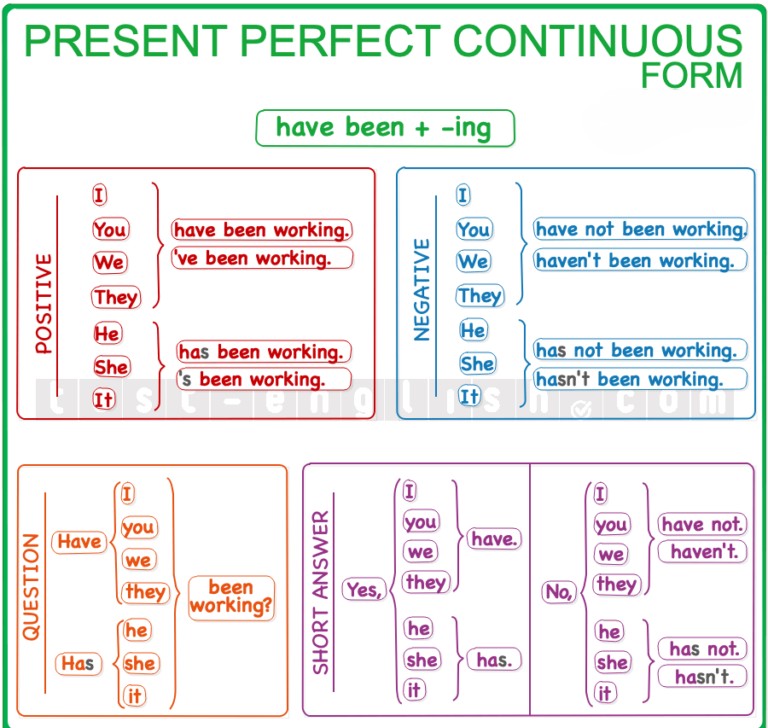
Formed with: have/has been + verb-ing
I have been working.
She has been studying all day.
They haven’t been sleeping well.
📥 Download full-size image from Pinterest
🟪Present Perfect Continuous: Use
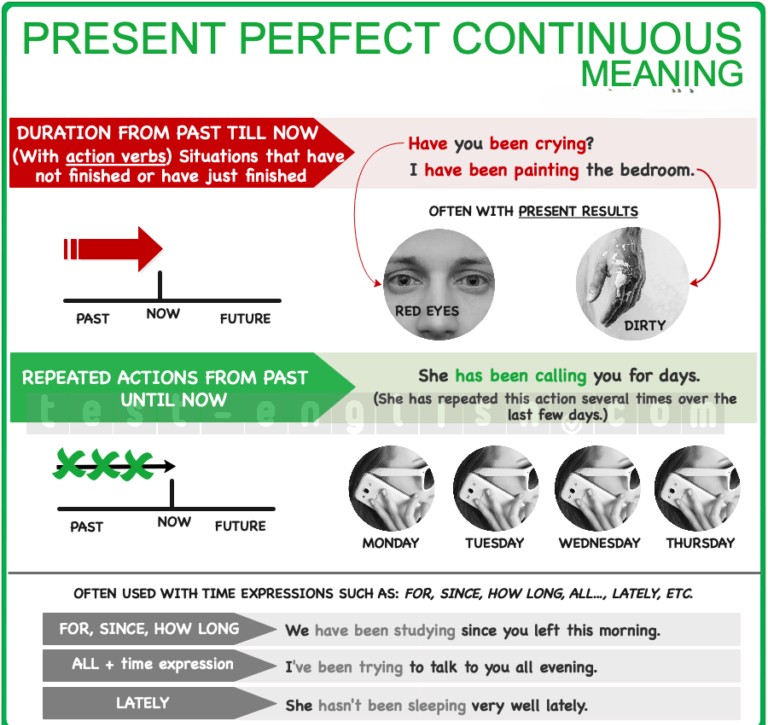
Use for actions that started in the past and are still happening, or just stopped with a visible result.
WithDuration & Repetition
- I’ve been waiting for you for two hours.
- She’s been calling me all morning.
- They’ve been arguing since breakfast.
With Present Results
- You’ve been crying. (Your eyes are red.)
- I’m exhausted — I’ve been running.
🟨Present Perfect Simple vs Continuous
✅ Ongoing Situations
Stative verbs → Use SIMPLE:
We’ve had this house for 10 years. ✅
We’ve been having this house... ❌
Dynamic verbs → Use CONTINUOUS to emphasize duration:
I’ve been learning Spanish for months. ✅
I’ve learned Spanish for months. ❌ (sounds unnatural)
✅ Finished vs Unfinished
Simple → Action completed:
Who’s eaten the cake? (It’s all gone.)
I’ve read that book. (Finished it.)
Continuous → Action possibly ongoing or just stopped:
Who’s been eating the cake? (Some left!)
I’ve been reading that book. (Not finished yet.)
✅ How Long vs How Many
Continuous → Duration:
I’ve been writing emails for three hours.
Simple → Quantity:
I’ve written ten emails today.
🟦Common Time Expressions
Use these with present perfect (simple or continuous):
✅ With Both
- for two hours
- since Monday
- how long
- lately / recently
✅ Mostly with Simple
- ever / never
- already / yet
- just
- so far / up to now
🟥Quick Summary: When to Use Which?
✅ Use Simple for:
- Completed actions (no time mentioned)
- Life experiences (ever/never)
- Stative verbs (know, have, believe, etc.)
- Quantity (how many/much)
✅ Use Continuous for:
- Ongoing actions (emphasize duration)
- Recent actions with visible results
- Repeated actions over time
- “How long” questions
📌 Remember:
Present Perfect Simple = completed actions, experiences, stative verbs, quantity
Present Perfect Continuous = ongoing actions, duration, physical results, repetition
⚠️ Use simple with stative verbs (like, know, believe, own)
🔁 How long → usually continuous | How many → simple
💡 Ask: “Is the action finished?” → Simple. “Is it still going or just stopped?” → Continuous.