Grammar / B1 Grammar lessons and exercises / B1 Phrasal verbs 3: Exercises and explanation
B1 Phrasal Verbs 61–90
This is the third of three B1 grammar lessons covering the most common intermediate phrasal verbs from the Cambridge Preliminary English Test (PET) vocabulary list. Each lesson includes 30 phrasal verbs—90 in total (out of 94 in the official list).
B1 Phrasal Verbs 61–70
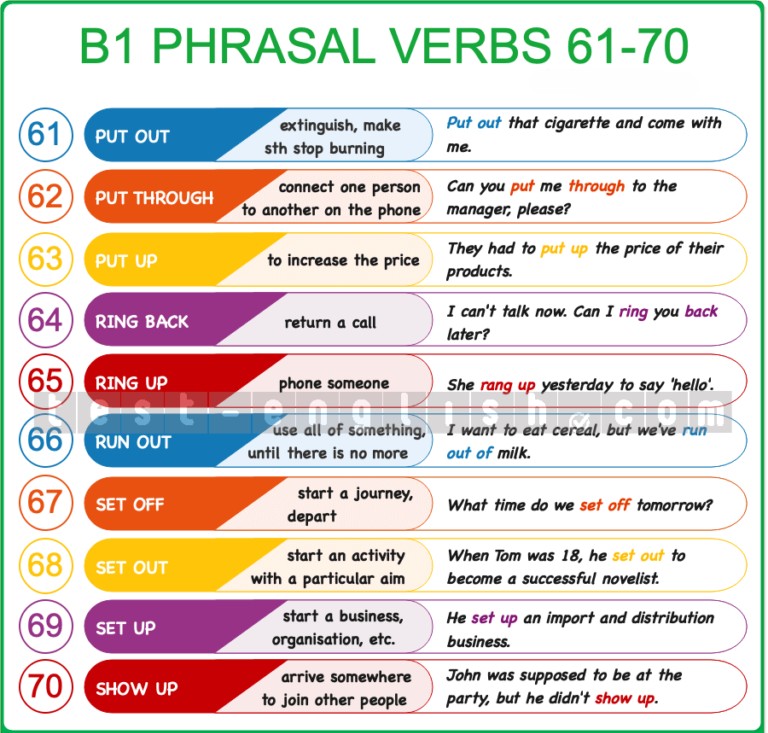
PUT OUT
If you put out a fire, cigarette, etc., you make it stop burning.
PUT THROUGH
If you put through a call, you connect the caller with the person they want to speak to.
PUT UP
If you put up the price of something, you increase its price.
RING BACK
If you ring someone back, you return a previous phone call they made to you.
RING UP
If you ring up (someone), you phone them.
RUN OUT
If you run out of something, you have no more of it left because you’ve used it all.
SET OFF
When you set off, you start a journey.
SET OUT
If you set out to do something, you start an activity with a particular aim.
SET UP
If you set up a business or organisation, you start it.
SHOW UP
If someone shows up, they arrive somewhere to join other people.
B1 Phrasal Verbs 71–80
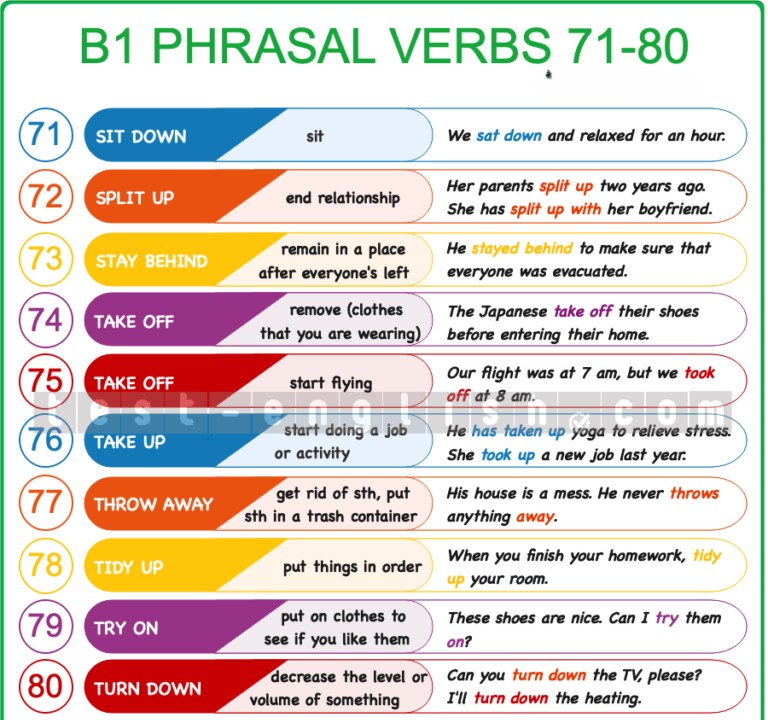
SIT DOWN
The verbs 'sit down' and 'sit' mean the same—move into a seated position.
SPLIT UP
If two people split up, or if someone splits up with someone else, they end their relationship.
STAY BEHIND
If you stay behind, you remain in a place after everyone else has left.
TAKE OFF
If you take off a piece of clothing, you remove it.
TAKE OFF
When an aeroplane takes off, it leaves the ground and starts flying.
TAKE UP
If you take up an activity or subject, you start doing it as a job, habit, or interest.
THROW AWAY
If you throw away something, you get rid of it (e.g., by putting it in the trash).
TIDY UP
When you tidy up a place, you put things back in their right places so it’s neat.
TRY ON
If you try on clothing, you put it on to see if it fits and you like it.
TURN DOWN
If you turn down the volume or level of something, you decrease it.
B1 Phrasal Verbs 81–90
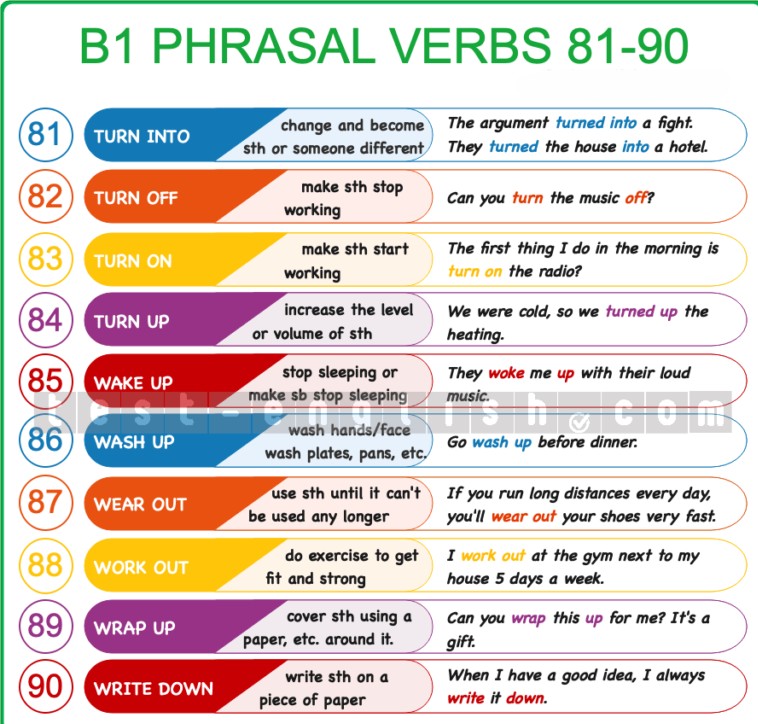
TURN INTO
If someone or something turns into someone/something else, they change and become that thing—or you cause the change.
TURN OFF
When you turn off equipment, you make it stop working (e.g., by pressing a button).
TURN ON
When you turn on equipment, you make it start working (e.g., by pressing a button).
TURN UP
If you turn up the volume or level of something, you increase it.
WAKE (UP)
When you wake (up) or someone wakes you (up), you become conscious after sleeping.
WASH UP
When you wash up, you clean your hands/face—or you clean dishes after a meal.
WEAR OUT
If something wears out (or you wear it out), it’s used so much it can no longer be used.
WORK OUT
When you work out, you do physical exercises to stay fit and strong.
WRAP UP
If you wrap something up, you cover it by putting paper or cloth around it.
WRITE DOWN
When you write something down, you write it on paper using a pen or pencil.
📌 Remember:
• These 30 phrasal verbs (61–90) complete the core set from the official Cambridge PET (B1) vocabulary list.
• Many phrasal verbs have multiple meanings (e.g., “take off” = remove clothes OR plane departure).
• Practice them in real contexts to master their usage!