Grammar / B1 Grammar lessons and exercises \ B1 Phrasal verbs 2: Exercises and explanation
B1 Phrasal Verbs 31–60
This is the second of three B1 grammar lessons covering the most common intermediate phrasal verbs from the Cambridge Preliminary English Test (PET) vocabulary list. Each lesson includes 30 phrasal verbs—90 in total (out of 94 in the official list).
B1 Phrasal Verbs 31–40
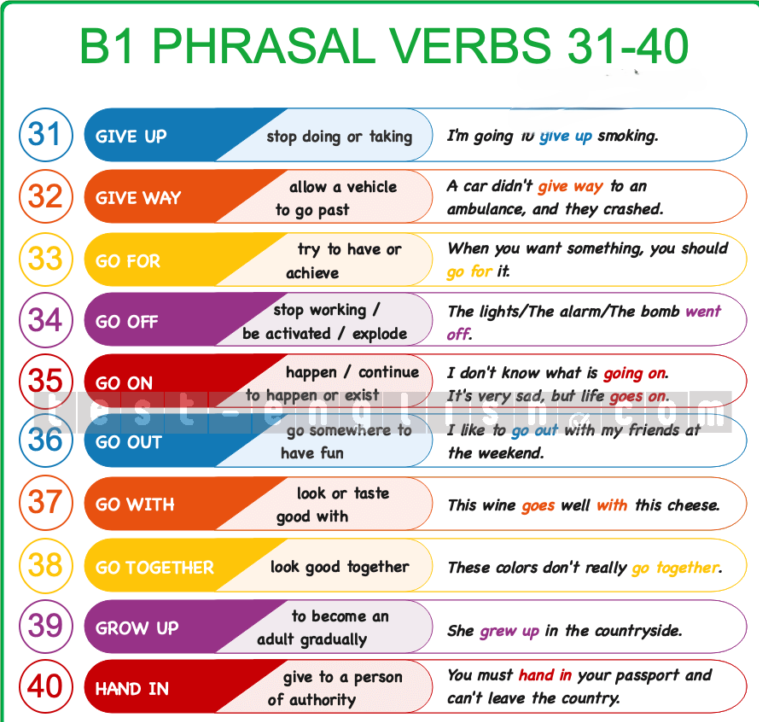
GIVE UP
If you give up something, you stop doing it or taking it: “I’m going to give up smoking.”
GIVE WAY
If you give way to a vehicle, you allow it to go past before you move.
GO FOR
If you go for something, you try to have or achieve something.
GO OFF
If a light or machine goes off, it stops working. If an alarm goes off, it starts ringing. If a bomb goes off, it explodes.
GO ON
If something goes on, it continues to happen. Also: “What’s going on?” = What is happening?
GO OUT
If you go out, you leave home for fun (e.g., to a party). If you go out with someone, you have a romantic relationship.
GO WITH
If one thing goes with another, they look or taste good together: “This wine goes well with cheese.”
GO TOGETHER
If two things go together, they look good together.
GROW UP
When someone grows up, they change from being a child into an adult.
HAND IN
If you hand in an exam, homework, or a found item, you give it to a teacher, police officer, or authority figure.
B1 Phrasal Verbs 41–50
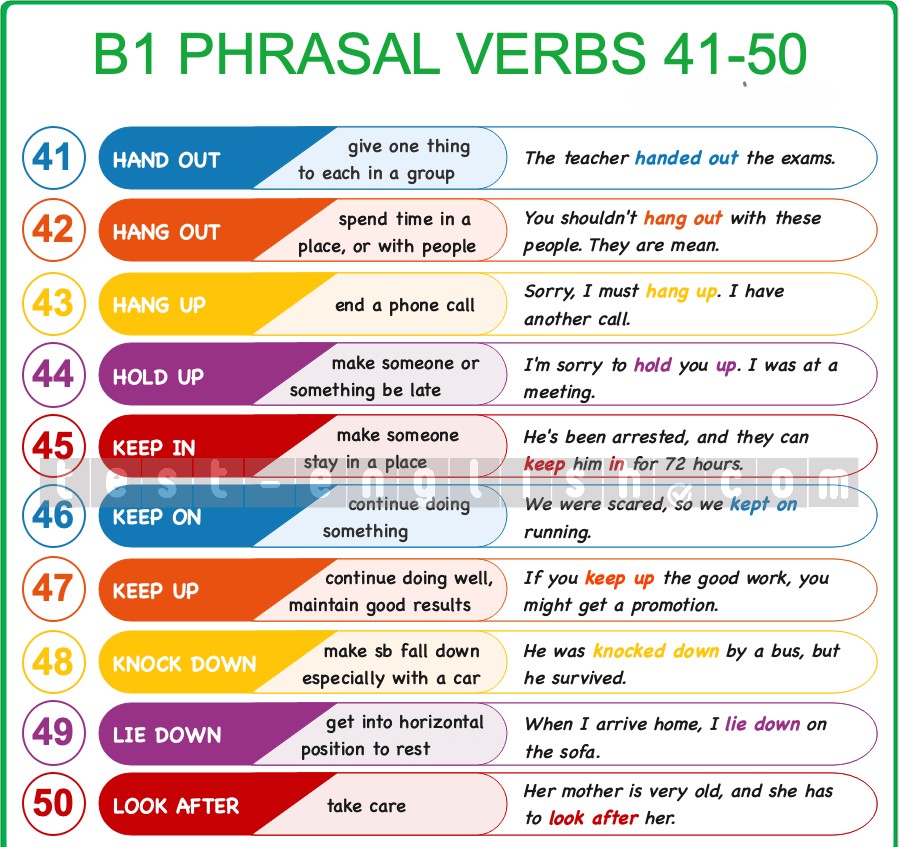
HAND OUT
If you hand things out to a group, you give one or more to each person.
HANG OUT
If you hang out in a place or with someone, you spend relaxed time there or with them.
HANG UP
If you hang up or hang up the phone, you end a phone call.
HOLD UP
To hold up someone or something means to delay them or make them late.
KEEP IN
If you keep someone in (a place), you make them stay there.
KEEP ON
If you keep on doing something, you continue doing it.
KEEP UP
If you keep up something good, you continue to do it well or maintain results.
KNOCK DOWN
If a person is knocked down by a vehicle, they are hit and fall (often injured). Also: to hit someone so they fall.
LIE DOWN
When you lie down, you move into a horizontal position, usually to rest or sleep.
LOOK AFTER
If you look after someone or something, you take care of them and keep them in good condition.
B1 Phrasal Verbs 51–60
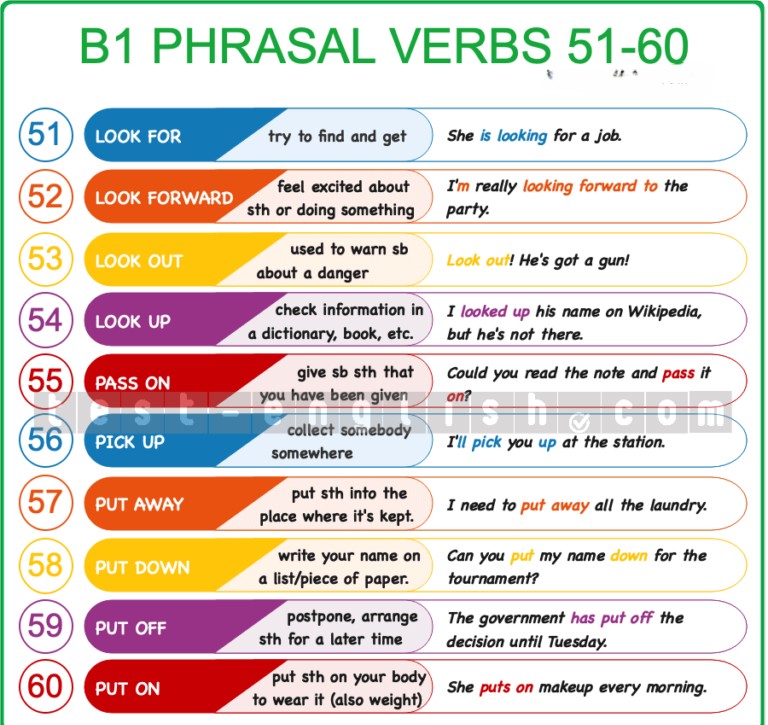
LOOK FOR
If you look for something, you try to find something you want or need.
LOOK FORWARD TO
If you look forward to something, you feel excited and want it to happen.
LOOK OUT
If you say “Look out!”, you are warning someone they are in danger.
LOOK UP
If you look up information, you search for it in a book, list, or online.
PASS ON
If you pass something on (to someone), you give it to them—especially if someone else gave it to you.
PICK UP
When you pick up someone or something, you go to their location and take them somewhere (often by car).
PUT AWAY
If you put something away, you return it to its usual storage place.
PUT DOWN
If you put something down (e.g., your name), you write it on a list or paper.
PUT OFF
If you put off something, you delay doing it until later.
PUT ON
If you put on clothes, glasses, or makeup, you wear them. If you put on weight, you become fatter.
📌 Remember:
• These 30 phrasal verbs (31–60) are part of the official Cambridge PET (B1) vocabulary list.
• Some phrasal verbs have multiple meanings (e.g., “put on” = wear clothes OR gain weight).
• Always learn them in context to use them correctly!
📚 Related lessons & tests:
B1 Phrasal Verbs 1 – Exercises and explanation
Verbs 1–30 from the PET list
B1 Phrasal Verbs 3 – Exercises and explanation
Verbs 61–90 from the PET list