Grammar / B1 Grammar lessons and exercises \ Usually, used to, be used to, get used to
Past Simple, Past Continuous, Past Perfect
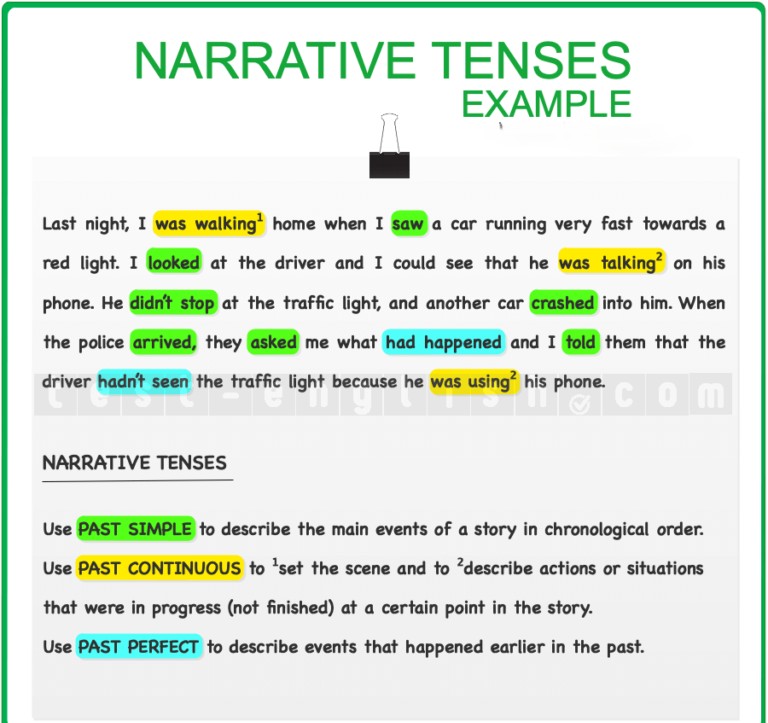
Narrative tenses for telling stories and describing past events
🟦Past Simple
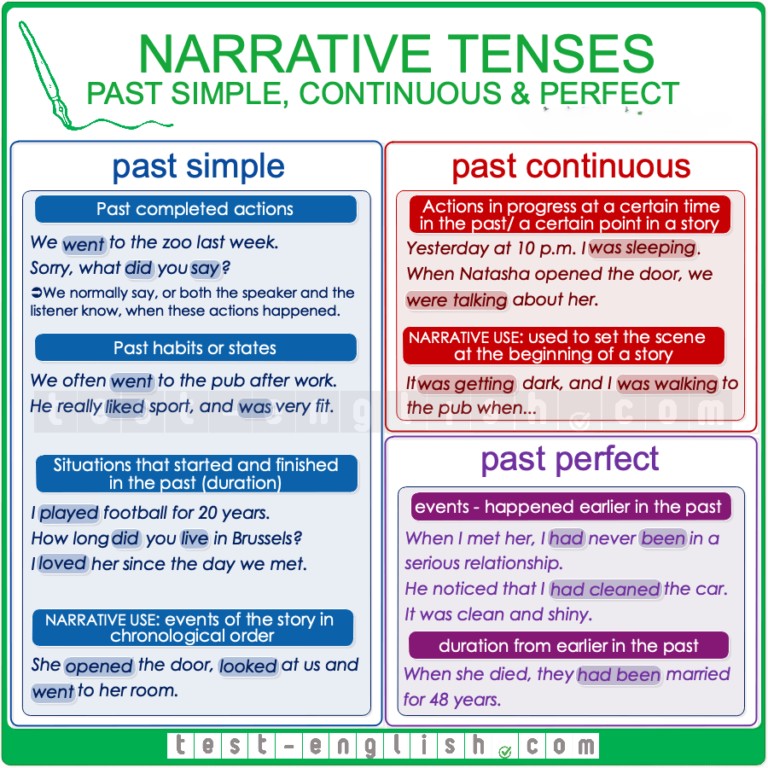
Used for completed actions in the past.
- ✅ We ate out yesterday. (action finished)
- ✅ In stories: When she opened the door, she pretended we weren’t there and went to her room.
- ✅ For past habits or states: We often went to the bar before dinner.
- ✅ He really liked sport and was very fit.
🟩Past Continuous
Used to set the scene or describe actions in progress when another action happened.
- ✅ Scene setting: Last night, I was walking home and listening to my iPod when…
- ✅ Background action: The sun was shining, and tourists were lying on the beach. Suddenly…
- ✅ Interrupted action: After dinner, I saw that she was crying.
- ✅ Simultaneous action: When she opened the door, we were talking about her.
🟪Past Perfect
Used for actions that happened before another past action.
Earlier Single Events
- ✅ When she opened the door, he had already left.
- ✅ I realised that I had been there before.
- ✅ When I met her, I had never been in a serious relationship.
- ✅ He noticed I had cleaned the car. It was smooth and shiny.
Quantity or Duration
- ✅ We had driven 500 miles and needed rest.
- ✅ How many hours had he slept when you woke him up?
Duration with Stative Verbs
- ✅ The day Anne died, they had been married for 48 years.
- ✅ The day I left, I had been in England for exactly four years.
- ✅ She told me she had always hated her sister.
🟥Common Mistakes & Quick Summary
❌ When I arrived, he was leaving. (implies coincidence)
✅ When I arrived, he had left. (he left BEFORE you arrived)
❌ I was knowing him for years.
✅ I had known him for years. (stative verb → use past perfect simple, not continuous)
❌ She was cooking when the phone rings.
✅ She was cooking when the phone rang. (both verbs must be in past tense)
📌 Quick Summary
- Past Simple → completed actions, habits, or states in the past.
- Past Continuous → actions in progress, background scenes, or interrupted actions.
- Past Perfect → actions that happened BEFORE another past action.
- Signal words: when, after, before, by the time, already, just, never, for, since.
📌 Remember:
Past Simple → main events in stories
Past Continuous → background / interrupted actions
Past Perfect → “the past before the past”
⚠️ Stative verbs (know, like, believe, etc.) usually don’t use continuous forms — use past perfect simple instead.
📚 Related tests:
Cartoon of a detective asking a skeleton:
“What were you doing at the time of the murder?”
Skeleton replies: “I was watering my beautiful flowers.”
(Grammar lesson on past continuous)
Practice:
Past Continuous and Past Simple
Past Perfect