Grammar / B1 Grammar lessons and exercises \ Have to, must, should: Obligation, prohibition, necessity, advice
Must / Mustn’t, Have to / Don’t Have to
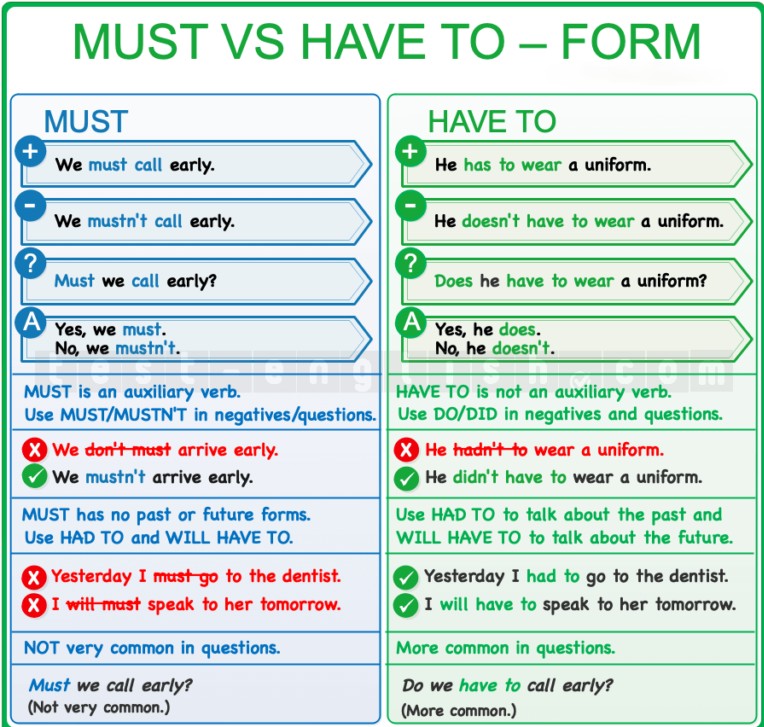
🟦Form: Have to vs Must
✅ Have to
Not a modal — needs “do/does/did” for negatives/questions:
- ❌ Have you to get up early? → ✅ Do you have to get up early?
- ✅ We don’t have to stay until the end.
- ✅ I had to cancel the meeting.
- ✅ She’s had to work weekends.
✅ Must
Modal verb — no auxiliary needed. Only present form:
- ✅ I must go to the doctor.
- ✅ You mustn’t call me before 8.
- ❌ I musted go → ✅ I had to go.
- ✅ Must I pay now? (formal/rare)
🟩Informal: Have got to
In spoken English, replace have to with ’ve got to:
- I ’ve got to go to the supermarket.
- She hasn’t got to be there until 10.
- Have you got to leave so soon?
🟪Use: Must vs Have to — Obligation Source
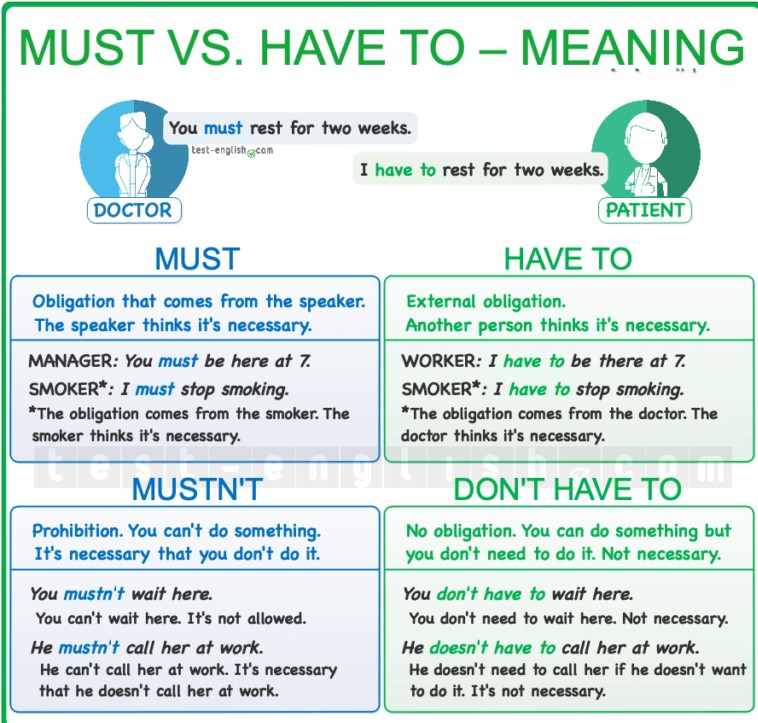
✅ Have to
External rules, laws, schedules, or other people’s demands:
- You have to drive on the left in England.
- I’ll have to get up early — exam at 8.
- We had to wear uniforms at school.
✅ Must
Speaker’s personal opinion, belief, or strong advice:
- You must eat less candy. (I’m telling you!)
- We must get up early to finish painting.
- You must see that film — it’s amazing!
🟨Mustn’t vs Don’t Have To — Opposite Meanings!
✅ You mustn’t wait here. → It’s forbidden.
✅ You don’t have to wait here. → It’s optional. You can leave if you want.
❌ Don’t confuse them — they mean very different things!
Mustn’t = prohibition (you are NOT allowed)
Don’t have to = no obligation (you can choose)
🟥Alternatives to Mustn’t
You can use can’t or be not allowed to instead of mustn’t:
- You mustn’t smoke here. = You can’t smoke here. = You are not allowed to smoke here.
- Children mustn’t eat gum. = Children can’t / aren’t allowed to eat gum.
🟦Should / Shouldn’t & Ought to
For advice or opinion — less strong than must:
✅ Should / Shouldn’t
- You should go to a therapist.
- Schools shouldn’t sell soft drinks.
- You should be patient with me. (advice)
✅ Ought to / Ought not to
More formal, less common:
- You ought to apologize.
- You ought not to be so strict.
💡 Compare strength:
You must be quiet. (strong obligation)
You should be quiet. (good advice)
You ought to be quiet. (formal suggestion)
📌 Remember:
Have to = external obligation, all tenses, needs “do/does/did”
Must = speaker’s opinion, only present, no auxiliary
Mustn’t = prohibition (NOT allowed)
Don’t have to = no obligation (optional)
Should = advice (weaker than must)
Ought to = formal should
🔄 Can’t / not allowed to = mustn’t