Grammar / A1 Grammar lessons and exercises /Verbs + to + infinitive and verbs + -ing
Verbs + -ing / Verbs + to Infinitive
Verbs Followed by -ing
Some verbs are followed by another verb in the -ing form. These include verbs of liking and disliking: love, like, enjoy, don’t mind, don’t like, hate.
- I love going to the gym.
- I like reading.
- I enjoy travelling.
- I don’t mind cooking.
- I don’t like doing homework.
- I hate getting up early.
This rule applies in the past too:
- When I was a child, I hated going to school. ✅
- When I was a child, I hated went to school. ❌
-ing spelling
You can check the spelling of the -ing form of the verbs in the table below.
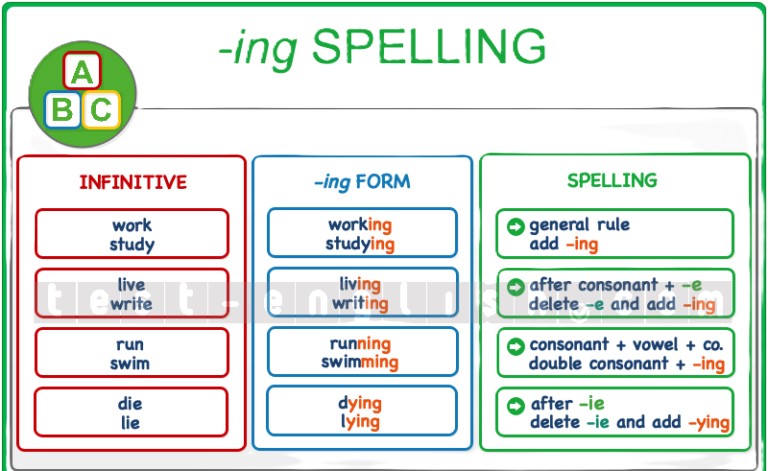
Spelling rules for the -ing form of verbs
Verbs Followed by to + Infinitive
Many verbs are followed by to + infinitive. Common ones include: forget, hope, learn, need, offer, plan, remember, start, want, would like.
- I forgot to turn off the light.
- I hope to see you soon.
- I’m learning to drive.
- We need to arrive early.
- She offered to help us.
- We’re planning to go to France.
- Remember to lock the door.
- I want to go home.
- I would like to buy a new computer.
This rule also applies in the past:
- I wanted to go home. ✅
- I wanted to went home. ❌
Would Like vs Like
Would like (or 'd like) is different from like.
- I’d like to study English. → I want to do it.
- I like studying English. → I enjoy it.
We use Would you like…? to make offers or suggestions:
- Would you like a cup of coffee?
- Would you like to dance with me?
Tip: Use verb + -ing after verbs like love, hate, enjoy. Use verb + to + infinitive after want, need, hope, would like. Never say “want to went” or “hate to went” — always use the base form after to.