Grammar / A1 Grammar lessons and exercises /Adverbs of frequency with present simple
Adverbs of Frequency – Grammar Guide
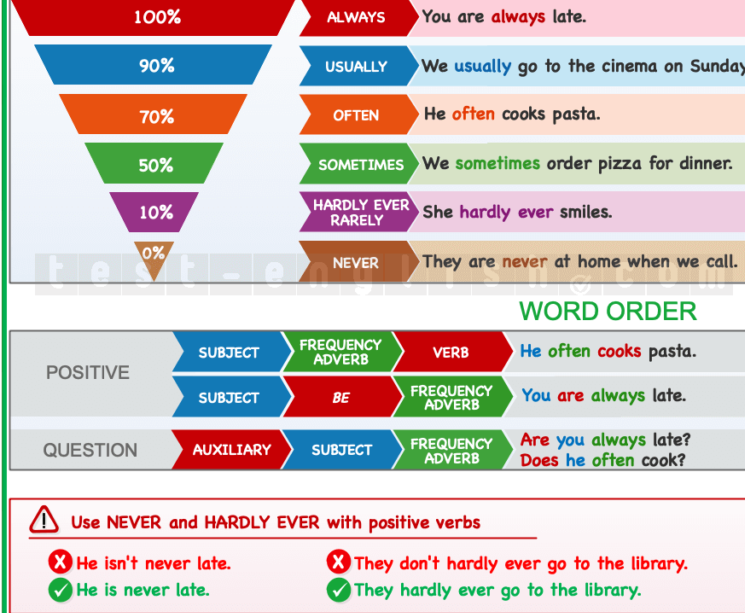
What Are Adverbs of Frequency?
We use adverbs of frequency with the present simple to talk about how often something happens.
- always (100%)
- usually (90%)
- often (70%)
- sometimes (50%)
- hardly ever (10%)
- never (0%)
Position: Before Verb, After 'Be'
Adverbs of frequency go:
- Before the main verb
- After the verb 'be' (am/is/are)
I always drink coffee in the morning. ✅
She is never late. ✅
They often go to the cinema. ✅
In Negative Sentences
In negative sentences, the adverb goes after don’t/doesn’t.
We don’t often go to bed late. ✅
He doesn’t always agree with me. ✅
In Questions
In questions, adverbs of frequency go after the subject.
Is he always late? ✅
Do they often go to the library? ✅
Never and Hardly Ever
Never and hardly ever (= almost never) have a negative meaning, but they are used with a positive verb (not with "don't").
 He is never late. ✅
 He isn’t never late. ❌They hardly ever go to the library. ✅They don’t hardly ever go to the library. ❌
Expressions of Frequency
We also use expressions like once a day, twice a week, every day, etc. These go at the end of the sentence.
I brush my teeth three times a day.
I see her every day.
We go on holiday twice a year.
📌 Key Rules Recap
- Use with present simple to say how often
- Go before main verbs: I usually eat breakfast
- Go after 'be': She is always happy
- In negatives: after don’t/doesn’t: We don’t often go
- In questions: after subject: Do you often go?
- Never/hardly ever = negative meaning, but use with positive verb
- Expressions (e.g., every day) go at the end